When building a fragrance brand, choosing the right manufacturing model is one of the most important decisions.
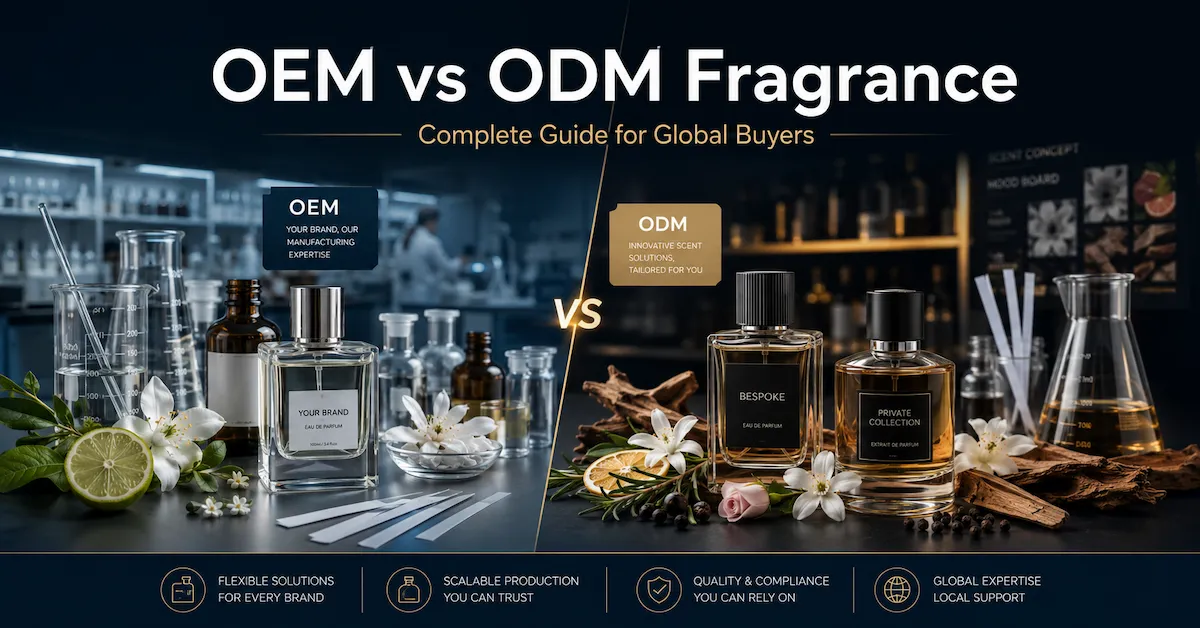
Many companies compare OEM vs ODM fragrance services because both options provide professional manufacturing support, but they are designed for different business needs.
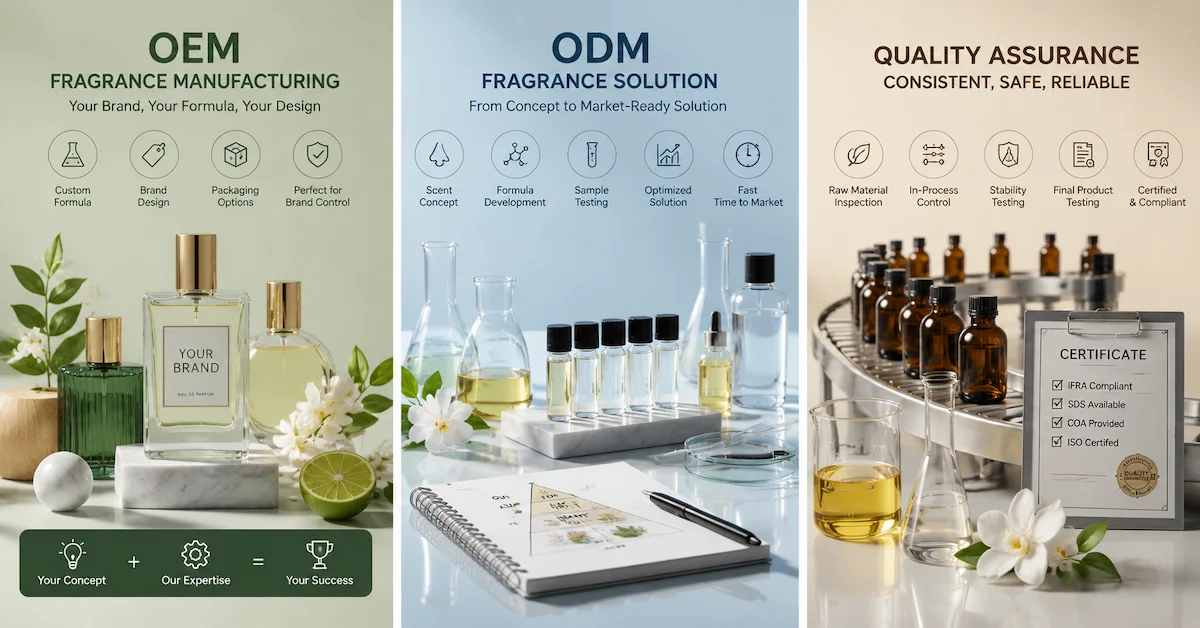
OEM (Original Equipment Manufacturing) allows brands to produce fragrance products based on their own concepts, formulas, or specifications. ODM (Original Design Manufacturing) provides deeper support, where manufacturers participate in product development, formula creation, and solution design.
Choosing between OEM and ODM depends on several factors:
- Brand experience
- Product development capability
- Budget
- Customization requirements
- Time-to-market goals
A reliable fragrance manufacturer should not only provide production capacity but also help brands select the most suitable cooperation model.
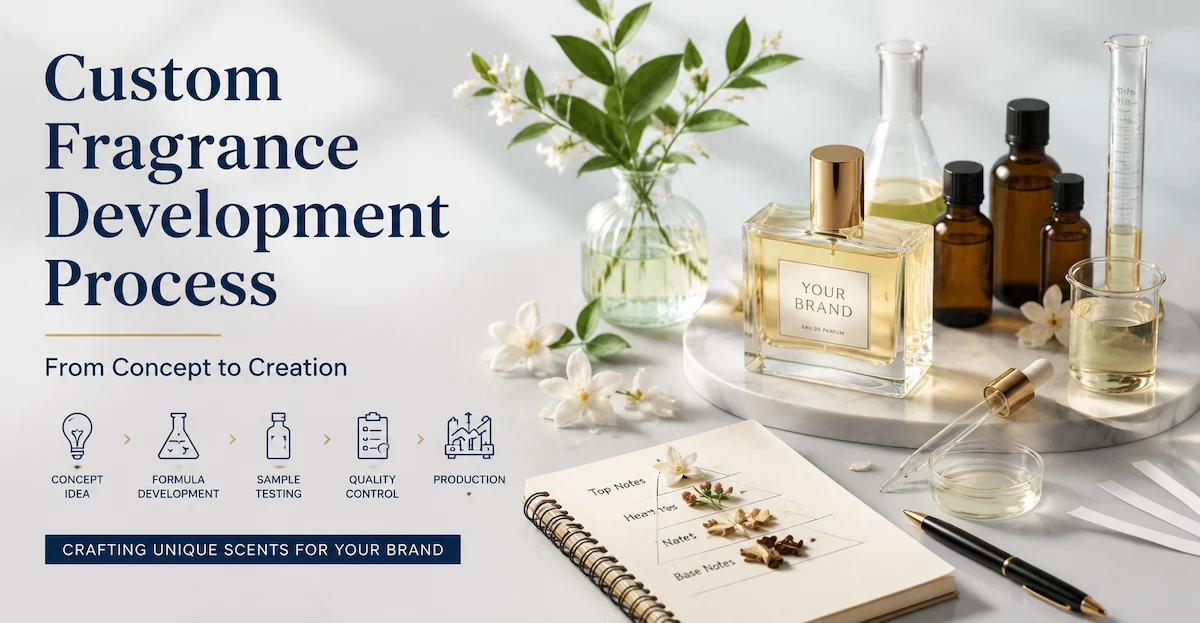
Understanding the complete fragrance development process can help buyers evaluate how manufacturers transform fragrance concepts into commercial products.
Understanding OEM Fragrance Manufacturing
What Is OEM Fragrance?
OEM fragrance manufacturing means a brand provides product requirements, concepts, or formulas, and the manufacturer produces according to the customer’s specifications.
The brand usually controls:
- Product positioning
- Fragrance direction
- Formula requirements
- Packaging design
- Marketing strategy
The manufacturer focuses on:
- Production execution
- Quality control
- Manufacturing efficiency
- Supply management
How OEM Fragrance Works
A typical OEM fragrance process includes:
| Stage | Description |
|---|---|
| Project Discussion | Understand product requirements and brand expectations |
| Formula Confirmation | Review fragrance specifications or customer formula |
| Sample Development | Create samples for approval |
| Production Planning | Prepare materials and manufacturing schedule |
| Mass Production | Produce according to approved standards |
| Quality Inspection | Verify final product quality |
OEM is suitable for companies that already understand their target market and have clear product concepts.
Advantages of OEM Fragrance Manufacturing
Higher Brand Control
OEM allows brands to maintain stronger control over:
- Fragrance direction
- Product positioning
- Brand identity
This is important for established companies that want to create a unique market image.
Greater Formula Ownership
For brands with their own fragrance concepts, OEM provides more flexibility in protecting product differentiation.
Companies can develop:
- Signature scents
- Exclusive fragrance profiles
- Market-specific products
Flexible Product Development
OEM is suitable for brands that already have:
- Internal product managers
- Marketing strategies
- Existing fragrance ideas
Understanding ODM Fragrance Manufacturing
What Is ODM Fragrance?
ODM fragrance manufacturing provides a more comprehensive development service.
Instead of only producing products, the manufacturer helps create solutions based on market requirements.
ODM services may include:
- Fragrance concept development
- Scent recommendations
- Formula creation
- Product optimization
- Production support
For companies without fragrance development experience, ODM can significantly reduce the complexity of launching new products.
How ODM Fragrance Works
A typical ODM fragrance development process includes:
| Stage | Description |
|---|---|
| Market Analysis | Understand target customers and market trends |
| Fragrance Concept | Define scent style and product direction |
| Formula Development | Create fragrance compositions |
| Sample Testing | Evaluate performance and customer feedback |
| Product Finalization | Confirm final formula and production plan |
ODM manufacturers act as development partners rather than only production suppliers.
Advantages of ODM Fragrance Manufacturing
Faster Product Development
ODM helps brands reduce development time by using the manufacturer’s experience and resources.
This is especially useful for:
- Start-up fragrance brands
- Retail companies
- New product categories
Professional Technical Support
ODM manufacturers provide expertise in:
- Fragrance notes
- Ingredient selection
- Formula stability
- Product application
Lower Development Risk
Instead of building an internal fragrance development team, brands can use existing manufacturing expertise.
This reduces:
- Research costs
- Development mistakes
- Testing complexity
OEM vs ODM Fragrance: Key Differences
| Factor | OEM Fragrance | ODM Fragrance |
|---|---|---|
| Development Responsibility | Mainly customer-led | Manufacturer-supported |
| Formula Creation | Customer provides requirements or formula | Manufacturer develops solutions |
| Customization Level | Very high | High |
| Brand Control | Higher | Flexible |
| Development Support | Limited | Comprehensive |
| Suitable For | Experienced brands | New brands and companies seeking support |
Which Model Is Better for Your Brand?
There is no universal answer.
The best choice depends on your business stage and resources.
Choose OEM If:
- You already have fragrance concepts
- You understand your customers
- You need strong product control
- You have internal development capability
Choose ODM If:
- You are launching a new fragrance line
- You need professional guidance
- You want faster market entry
- You need support from concept to production
For many growing brands, ODM provides a practical starting point, while established brands often prefer OEM for stronger customization.
Evaluate OEM and ODM Fragrance Costs and Business Risks
When comparing OEM vs ODM fragrance services, brands should not only consider the initial production price. The total cost is influenced by development requirements, formula complexity, testing procedures, packaging choices, and production volume.
A professional fragrance manufacturer helps buyers balance product quality, customization level, and investment efficiency.
Factors Affecting OEM Fragrance Cost
OEM fragrance costs are usually affected by:
Formula Development
If a brand provides an existing formula, development costs may be lower.
However, creating a completely new fragrance formula may require:
- Fragrance evaluation
- Multiple sample rounds
- Formula adjustments
- Stability testing
Ingredient Selection
Different fragrance materials have different costs.
Factors include:
- Natural ingredients
- Premium aroma compounds
- Rare fragrance notes
- Formula complexity
Production Volume
Large-volume production usually provides better cost efficiency because:
- Raw materials can be purchased in bulk
- Production efficiency improves
- Packaging costs can be optimized
Factors Affecting ODM Fragrance Cost
ODM services often include more development support, so costs may include:
- Market research
- Fragrance concept creation
- Formula development
- Sample testing
- Product optimization
Although ODM may require more initial investment, it can reduce internal development costs for companies without fragrance expertise.
OEM vs ODM Cost Comparison
| Cost Factor | OEM Fragrance | ODM Fragrance |
|---|---|---|
| Formula Development | Customer controlled | Manufacturer supported |
| Development Investment | Depends on customer requirements | Usually higher due to additional support |
| Technical Support | Limited | More comprehensive |
| Suitable For | Experienced brands | Companies needing guidance |
| Long-Term Value | High product control | Faster product development |
Choose the Right Manufacturing Model Based on Your Business Stage
Different brands have different needs.
Start-Up Fragrance Brands
Recommended:
ODM Fragrance Manufacturing
Reasons:
- Limited fragrance development experience
- Need professional guidance
- Faster product launch
ODM suppliers can support:
- Scent concept development
- Formula creation
- Product recommendations
- Manufacturing execution
Established Fragrance Brands
Recommended:
OEM Fragrance Manufacturing
Reasons:
- Existing product strategy
- Strong brand identity
- Need formula control
OEM allows companies to maintain greater control over:
- Product differentiation
- Brand positioning
- Customer experience
Beauty and Cosmetics Companies
Both models can work depending on requirements.
For example:
A skincare company launching a new scented body care line may choose ODM for fragrance development support, while an established beauty brand with its own fragrance direction may prefer OEM.
Applications of OEM and ODM Fragrance Services
OEM and ODM fragrance solutions are used across multiple industries.
Fine Fragrance Brands
Applications include:
- Perfume
- Eau de parfum
- Body mist
- Luxury fragrance collections
Brands often require:
- Unique scent profiles
- Premium ingredients
- Long-lasting performance
Personal Care Products
Applications include:
- Shampoo fragrance
- Body wash fragrance
- Lotion fragrance
- Cosmetic fragrance
Important requirements:
- Formula compatibility
- Skin-friendly fragrance solutions
- Stable scent performance
Home Care Products
Applications include:
- Laundry detergent fragrance
- Fabric softener fragrance
- Room spray fragrance
- Air freshener fragrance
Key requirements:
- Long-lasting scent release
- Odor control
- Product stability
Hospitality and Commercial Spaces
Hotels and commercial businesses often use custom fragrance solutions to create memorable environments.
Applications include:
- Hotel lobby scent
- Signature hotel fragrance
- Retail space fragrance
Brands seeking personalized scent development can explore professional custom fragrance solutions to understand how fragrance concepts can be adapted for different applications.
How OEM and ODM Fragrance Development Works
Whether choosing OEM or ODM, a professional development process is essential.
A reliable fragrance manufacturer usually follows a structured workflow.
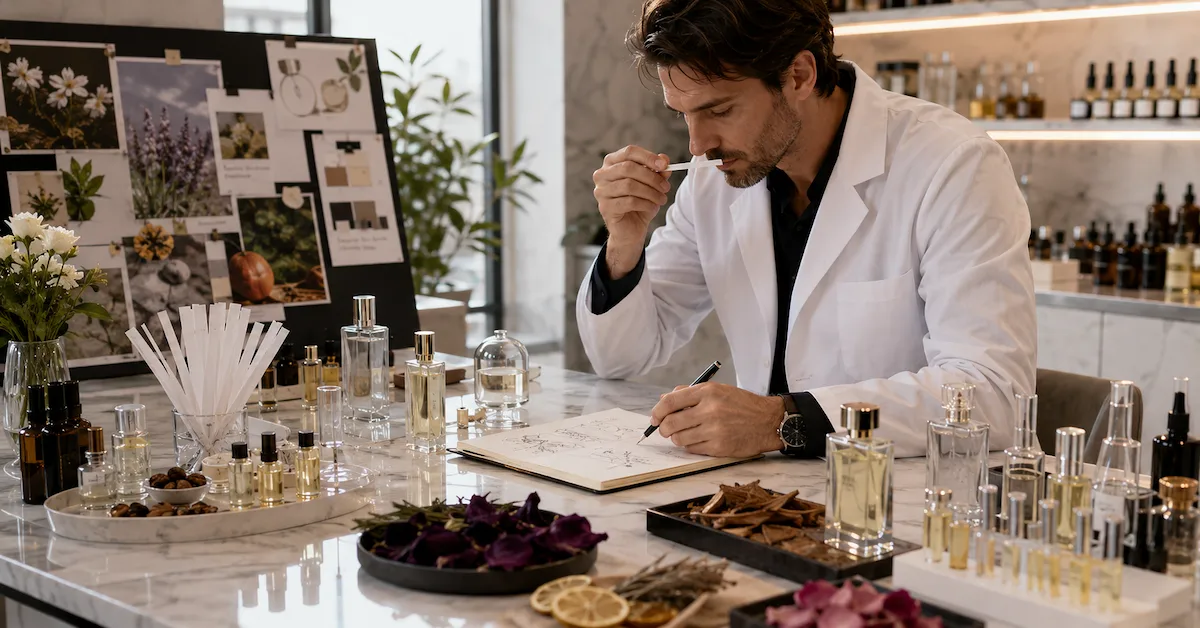
Step 1: Fragrance Brief Analysis
The manufacturer reviews:
- Brand positioning
- Target customers
- Product category
- Preferred fragrance style
- Market expectations
Step 2: Fragrance Concept Development
The development team defines:
- Scent direction
- Fragrance family
- Note structure
- Product positioning
Common fragrance structures include:
Top Notes
Provide the first impression.
Examples:
- Citrus
- Fresh notes
- Green notes
Middle Notes
Create the main character.
Examples:
- Floral
- Fruity
- Spicy
Base Notes
Provide lasting depth.
Examples:
- Woody
- Amber
- Musk
Step 3: Sample Creation and Testing
Manufacturers create samples for evaluation.
Testing may include:
- Scent evaluation
- Formula compatibility
- Stability testing
- Performance assessment
Step 4: Formula Optimization
Based on customer feedback, manufacturers adjust:
- Fragrance intensity
- Ingredient balance
- Performance
- Cost structure
Step 5: Final Production
After approval, the manufacturer moves into:
- Raw material preparation
- Production
- Quality inspection
- Packaging
- Delivery
Understanding the complete fragrance development process helps brands better evaluate manufacturing partners and cooperation models.
Quality Control and Compliance in OEM and ODM Fragrance Production
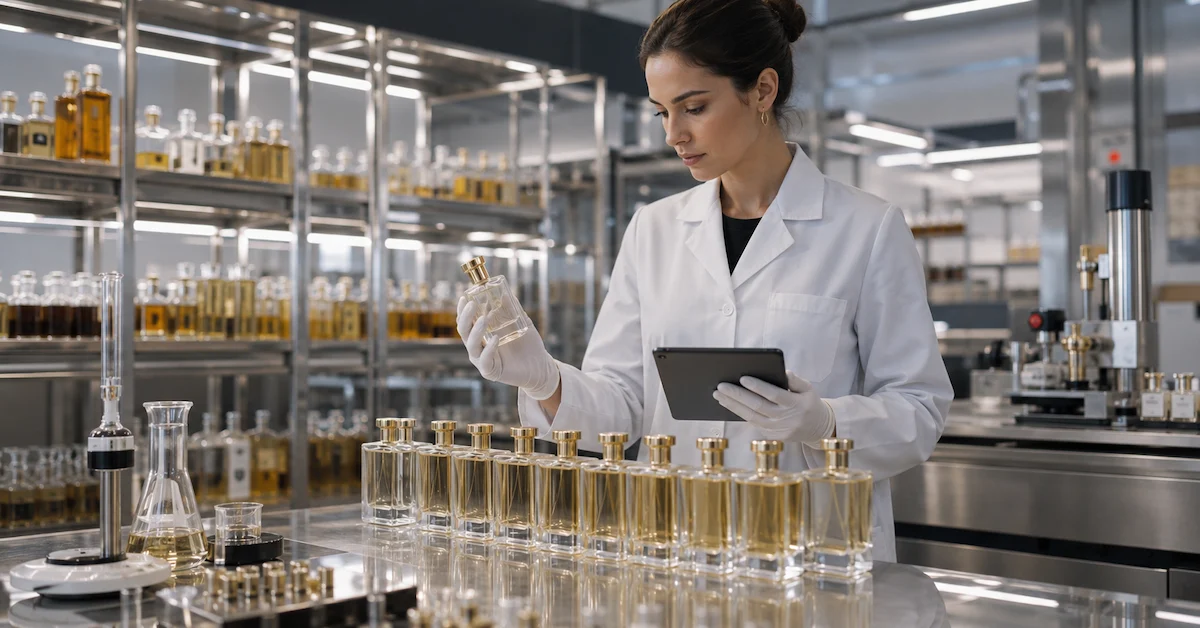
Quality control is a critical factor when selecting an OEM or ODM fragrance partner.
A reliable manufacturer should have a complete quality management system.
Fragrance Quality Control Process
Important quality checks include:
| Quality Control Stage | Purpose |
|---|---|
| Raw Material Inspection | Verify ingredient quality |
| Formula Verification | Confirm approved fragrance composition |
| Stability Testing | Check long-term performance |
| Batch Testing | Ensure production consistency |
| Final Inspection | Confirm finished product quality |
Fragrance Testing Methods
Common testing methods include:
Stability Testing
Evaluates fragrance performance under:
- Different temperatures
- Storage conditions
- Time periods
Compatibility Testing
Checks whether fragrance works properly with:
- Cosmetic bases
- Cleaning formulas
- Other product systems
Sensory Evaluation
Professional teams evaluate:
- Scent balance
- Intensity
- Overall experience
Certifications and Documents Buyers Should Request
Before cooperation, international buyers should confirm whether suppliers can provide necessary documents.
IFRA Certificate
IFRA compliance demonstrates that fragrance formulas follow recognized industry safety guidelines.
SDS
Safety Data Sheet provides:
- Product safety information
- Handling requirements
- Storage recommendations
COA
Certificate of Analysis verifies:
- Product specifications
- Testing information
- Batch details
Other documents may include:
- Allergen Declaration
- REACH Compliance
- Regional regulatory documents
How to Select the Right OEM or ODM Fragrance Manufacturer
Before cooperation, buyers should evaluate the following factors:
| Evaluation Factor | Questions to Ask |
|---|---|
| R&D Capability | Can they develop customized fragrances? |
| Manufacturing Experience | Do they understand different applications? |
| Sample Process | Can they provide professional testing and adjustment? |
| Quality Control | Are production standards established? |
| Compliance | Can they provide IFRA, SDS, and COA? |
| Production Capacity | Can they support future growth? |
| OEM/ODM Support | Can they provide suitable cooperation models? |
A reliable supplier should act as a long-term partner rather than only a production provider.
Frequently Asked Questions About OEM vs ODM Fragrance
What is the difference between OEM and ODM fragrance?
OEM fragrance focuses on manufacturing based on customer requirements, while ODM fragrance includes additional product development support from the manufacturer.
Which is better for a new fragrance brand, OEM or ODM?
ODM is usually more suitable for new brands because it provides professional development support and reduces the need for internal fragrance expertise.
Can ODM fragrance manufacturers create custom scents?
Yes. ODM manufacturers can help develop fragrance concepts, create formulas, and optimize products based on brand requirements.
Does OEM fragrance provide more customization?
Yes. OEM usually provides higher brand control because customers have more influence over formulas, specifications, and product direction.
How long does OEM or ODM fragrance development take?
The timeline depends on product complexity, sample adjustments, testing requirements, and customer approval speed.
What information should I provide to a fragrance manufacturer?
Buyers should provide:
- Product category
- Target market
- Preferred scent style
- Brand positioning
- Expected production volume
Can OEM and ODM fragrance manufacturers provide private label services?
Yes. Many manufacturers provide private label fragrance solutions including formula development, packaging support, and production.
What certifications should fragrance manufacturers provide?
Common documents include:
- IFRA Certificate
- SDS
- COA
- Allergen Declaration
How do I choose between OEM and ODM services?
Consider your:
- Product development experience
- Budget
- Customization requirements
- Time-to-market goals
Where can I learn more about fragrance manufacturing?
You can explore more industry insights through our fragrance knowledge center, including fragrance development, applications, and supplier selection guides.
Conclusion: Choosing Between OEM and ODM Fragrance Services
Choosing between OEM vs ODM fragrance depends on your brand’s goals, resources, and product development requirements.
OEM is ideal for companies that already have clear product concepts and want maximum control over manufacturing.
ODM is better suited for businesses seeking professional guidance, faster product development, and complete fragrance solutions.
A reliable fragrance manufacturer should provide:
- Professional fragrance development
- Flexible OEM and ODM services
- Strict quality control
- Compliance documentation
- Scalable production capability
If you are developing a new fragrance product or looking for a manufacturing partner, contact our fragrance team to discuss your project requirements and receive customized fragrance solutions.