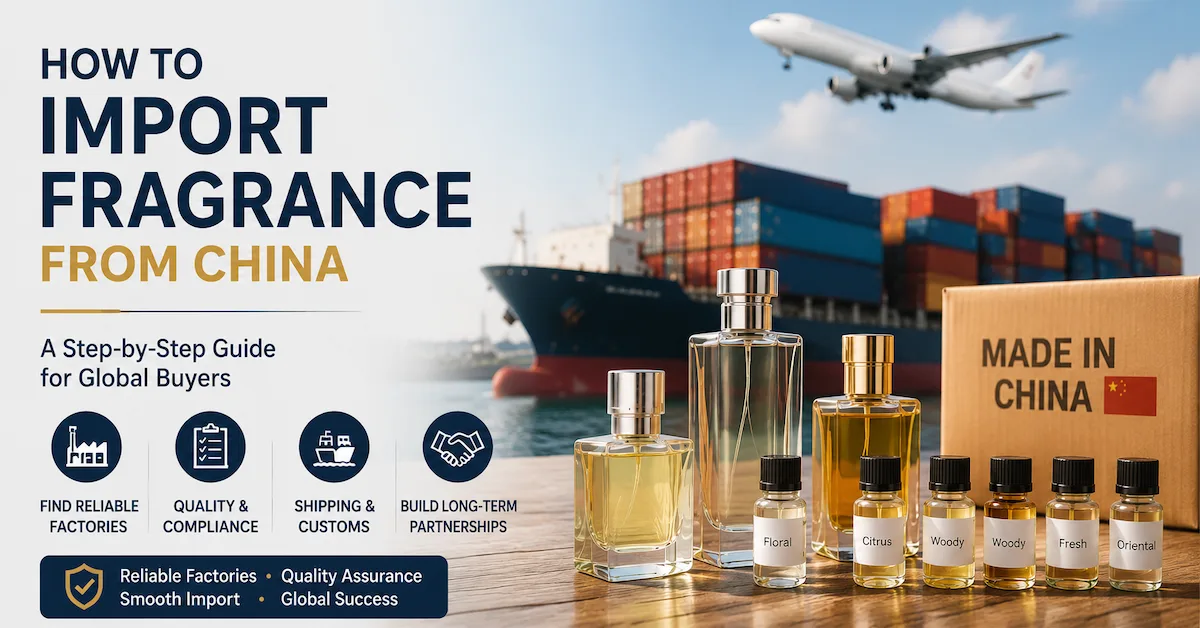
China has become an important manufacturing base for global fragrance supply chains.
For international buyers, working with a professional fragrance factory China can provide advantages in:
- Manufacturing efficiency
- Custom development capability
- Flexible production solutions
- Competitive supply chains
However, successful importing requires careful supplier evaluation and quality management.
Competitive Manufacturing Advantages
Chinese fragrance manufacturers benefit from:
- Established raw material supply chains
- Advanced production facilities
- Experienced technical teams
- Efficient manufacturing processes
These advantages allow brands to develop fragrance products with competitive costs while maintaining customization flexibility.
OEM and Custom Development Capability
Many Chinese fragrance factories provide OEM and ODM services.
This allows brands to create:
- Custom scent profiles
- Private label products
- Market-specific fragrance solutions
Services may include:
- Fragrance concept development
- Formula creation
- Sample testing
- Mass production
Brands interested in customized scent development can explore professional custom fragrance solutions for different applications.
How to Find a Reliable Fragrance Factory China
Selecting the right supplier is the most important step when importing fragrance.
A qualified factory should have:
- Manufacturing experience
- R&D capability
- Compliance documentation
- Quality control systems
Evaluate Factory Experience
Before cooperation, buyers should review:
- Years of industry experience
- Product categories
- Export markets
- Customer applications
A factory experienced in international markets usually understands:
- Export requirements
- Documentation standards
- Customer communication needs
Check R&D Capability
Fragrance development requires technical expertise.
A professional supplier should provide:
- Fragrance formulation
- Application knowledge
- Sample development
- Formula optimization
For buyers developing new products, understanding the complete fragrance development process helps evaluate supplier capability.
Verify Quality and Compliance
Quality documentation is essential for international purchasing.
Buyers should confirm whether suppliers provide:
- IFRA Certificate
- SDS
- COA
- Testing reports
Compliance support helps brands reduce risks when entering international markets.
Step-by-Step Process of Importing Fragrance from China
A successful import process usually includes several stages.
Step 1: Define Product Requirements
Before contacting suppliers, buyers should prepare:
- Product application
- Fragrance type
- Target market
- Expected quantity
- Performance requirements
Examples:
Laundry brands may require:
- Long-lasting fragrance
- Fabric retention
Hotel brands may require:
- Ambient fragrance
- Signature scent development
Step 2: Contact and Evaluate Suppliers
During supplier evaluation, buyers should review:
- Factory information
- Product capability
- Certifications
- Previous experience
Important questions include:
- Can you develop custom fragrances?
- Do you support OEM production?
- Can you provide compliance documents?
- What applications do you specialize in?
Step 3: Request Samples and Testing
Before mass production, buyers should request samples.
The sample process usually includes:
- Initial fragrance samples
- Customer evaluation
- Formula adjustment
- Final approval
Testing helps confirm:
- Scent quality
- Product compatibility
- Performance expectations
Step 4: Confirm Order and Production
After approval, the factory begins production.
The process usually includes:
- Production scheduling
- Raw material preparation
- Manufacturing
- Quality inspection
Professional suppliers maintain communication throughout production.
Step 5: Shipping and Customs Clearance
International fragrance importing requires proper export preparation.
Important documents may include:
| Document | Purpose |
|---|---|
| IFRA Certificate | Fragrance safety compliance |
| SDS | Safety information |
| COA | Quality verification |
| Invoice | Trade documentation |
| Packing List | Shipment details |
Proper documentation helps avoid customs delays.
How to Control Fragrance Quality When Importing from China
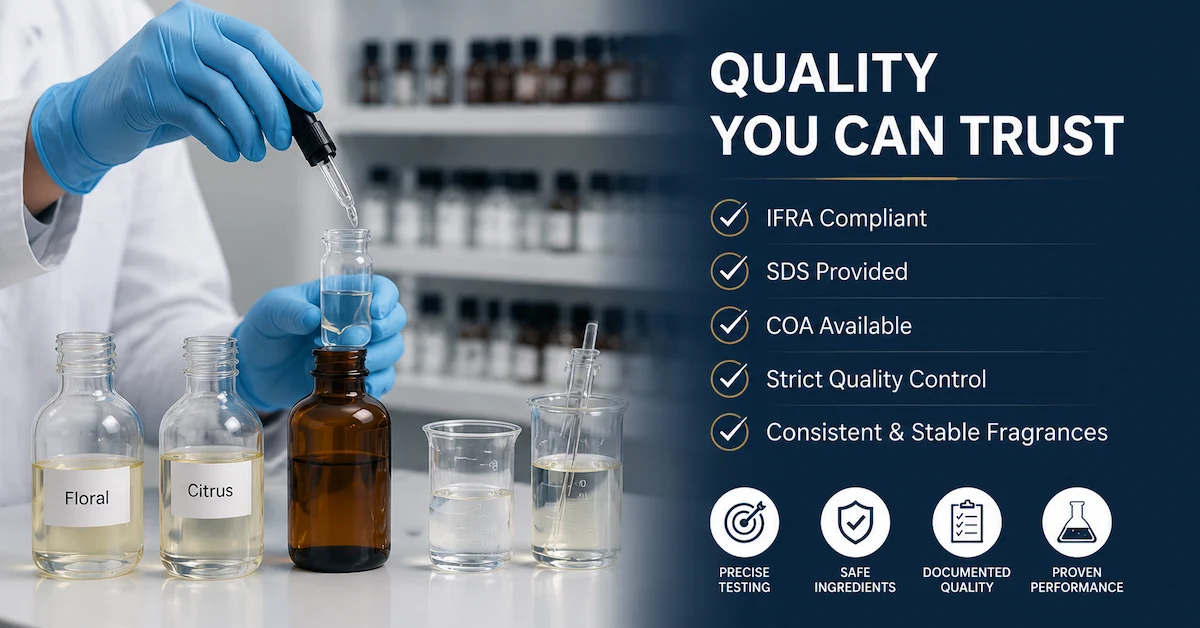
Quality control is one of the most important factors when importing fragrance products.
Although China offers strong manufacturing capabilities, international buyers should still establish a clear quality evaluation process before placing large orders.
A reliable fragrance factory China partner should provide quality management throughout:
- Raw material selection
- Formula development
- Production
- Final inspection
- Shipment preparation
Sample Approval Before Mass Production
Before starting bulk production, buyers should approve final samples.
Sample evaluation should include:
Fragrance Profile
Confirm:
- Scent direction
- Fragrance intensity
- Note balance
- Overall experience
Product Performance
Evaluate:
- Stability
- Longevity
- Application compatibility
Packaging and Documentation
Verify:
- Product labeling
- Documents
- Packaging requirements
Sample approval reduces the risk of receiving products that do not match expectations.
Production Quality Inspection
During manufacturing, professional factories perform quality checks at different stages.
Important inspection areas include:
| Inspection Stage | Purpose |
|---|---|
| Raw Material Inspection | Verify ingredient quality |
| Formula Verification | Confirm approved formula |
| Batch Testing | Maintain consistency |
| Final Inspection | Ensure shipment quality |
A stable quality control system helps brands maintain consistent fragrance performance across multiple orders.
Pre-shipment Inspection
Before shipment, buyers should confirm:
- Product quantity
- Packaging condition
- Documentation completeness
- Final quality status
Pre-shipment inspection helps avoid:
- Shipping disputes
- Product issues
- Delivery delays
OEM and Private Label Fragrance from China
Many overseas buyers choose Chinese fragrance factories because they offer flexible OEM and private label solutions.
These services allow companies to create products under their own brand identity.
OEM Fragrance Manufacturing
OEM services are suitable for brands that already have:
- Product concepts
- Fragrance requirements
- Brand positioning
Manufacturers provide:
- Production capability
- Quality control
- Supply support
Private Label Fragrance Solutions
Private label services are suitable for:
- New fragrance brands
- Retailers
- Distributors
Services may include:
- Custom scent development
- Packaging coordination
- Product manufacturing
- Documentation support
Benefits of Working with OEM Suppliers
Advantages include:
- Lower development investment
- Faster product launch
- Professional manufacturing support
- Scalable production
Common Mistakes When Importing Fragrance from China
International buyers should avoid several common mistakes during sourcing.
Choosing Suppliers Only by Price
Low prices may create risks such as:
- Poor raw materials
- Inconsistent quality
- Limited technical support
A better approach is evaluating:
- Manufacturing capability
- Quality systems
- Technical expertise
Ignoring Compliance Requirements
Some buyers focus only on product cost and overlook compliance documents.
Important documents include:
- IFRA Certificate
- SDS
- COA
Without proper documentation, products may face:
- Import delays
- Market restrictions
- Customer concerns
Skipping Sample Testing
Ordering directly without testing samples can lead to:
- Incorrect fragrance profile
- Poor performance
- Formula compatibility problems
Professional buyers should always complete:
- Sample review
- Performance testing
- Final approval
How to Choose the Right Fragrance Factory China Partner
Fragrance Factory China
Choosing a long-term fragrance partner requires evaluating multiple factors.
Manufacturing Experience
A reliable factory should understand:
- Different product applications
- International buyer requirements
- Export procedures
Technical Development Capability
Strong suppliers should provide:
- Custom fragrance development
- Formula optimization
- Application solutions
Compliance Support
Professional factories should support:
- IFRA documentation
- SDS
- COA
- Quality records
Production and Supply Capability
Evaluate:
- Production capacity
- Delivery ability
- Quality consistency
Fragrance Factory China Evaluation Checklist
| Evaluation Factor | Why It Matters |
|---|---|
| Factory Experience | Ensure reliable manufacturing |
| R&D Capability | Support custom fragrance projects |
| Compliance Support | Meet international requirements |
| Quality Control | Maintain product consistency |
| Export Experience | Reduce import risks |
| Production Capacity | Support business growth |
Frequently Asked Questions About Importing Fragrance from China
Is China good for fragrance manufacturing?
Yes. China has a mature fragrance supply chain, experienced manufacturers, and strong OEM capabilities for global brands.
However, buyers should carefully evaluate supplier quality, compliance, and technical capability.
How do I find a fragrance factory in China?
Buyers should evaluate:
- Factory experience
- Product applications
- R&D capability
- Certifications
- Export experience
What documents are needed to import fragrance from China?
Common documents include:
- IFRA Certificate
- SDS
- COA
- Invoice
- Packing List
Can Chinese fragrance factories provide custom fragrance?
Yes. Many manufacturers provide:
- Custom scent development
- OEM services
- Private label solutions
What is the MOQ for fragrance orders?
MOQ depends on:
- Product type
- Formula requirements
- Packaging
- Production process
How long does fragrance production take?
Production time depends on:
- Sample approval
- Formula complexity
- Order quantity
- Testing requirements
Are Chinese fragrance suppliers IFRA compliant?
Many professional suppliers provide IFRA documentation and compliance support.
Buyers should always verify certificates before cooperation.
Can I import private label fragrance from China?
Yes. Many Chinese fragrance manufacturers support private label projects, including scent development, packaging, and production.
How do I check fragrance quality before shipping?
Recommended steps include:
- Sample approval
- Quality inspection
- Batch testing
- Pre-shipment inspection
How much does it cost to import fragrance from China?
Costs depend on:
- Formula type
- Order quantity
- Packaging
- Shipping method
- Compliance requirements
For more fragrance sourcing information, explore our fragrance knowledge center.
Conclusion: Building Successful Fragrance Supply Chains from China
Importing fragrance from China can provide brands with access to strong manufacturing capabilities, flexible customization, and competitive supply solutions.
However, successful sourcing requires more than finding a low-cost supplier.
Professional buyers should evaluate:
- Factory capability
- R&D expertise
- Quality control
- Compliance support
- Export experience
A reliable Fragrance Factory China partner can help brands develop high-quality fragrance products while reducing sourcing risks.
Whether you need OEM fragrance, private label solutions, or custom fragrance development, choosing the right manufacturing partner is essential.
If you are looking for a reliable fragrance supplier in China, contact our fragrance team to discuss your project requirements.