Choosing the right fragrance manufacturer is one of the most important decisions for brands that want to create successful fragrance products. A reliable manufacturer does more than produce fragrance materials. The right partner provides professional fragrance development, technical support, quality assurance, and scalable production solutions.
For perfume brands, cosmetics companies, home care manufacturers, and hospitality businesses, selecting the wrong supplier may lead to inconsistent fragrance quality, delayed production, compliance risks, and additional development costs.
A professional fragrance manufacturer should have strong capabilities in fragrance formulation, raw material management, product testing, quality control, and customized scent creation. Understanding the complete fragrance development process can help brands evaluate whether a supplier has the technical expertise required for long-term cooperation.
This guide explains the key factors global buyers should consider before choosing a fragrance supplier, including R&D capability, manufacturing process, sample development, quality control, certifications, OEM/ODM services, and production reliability.
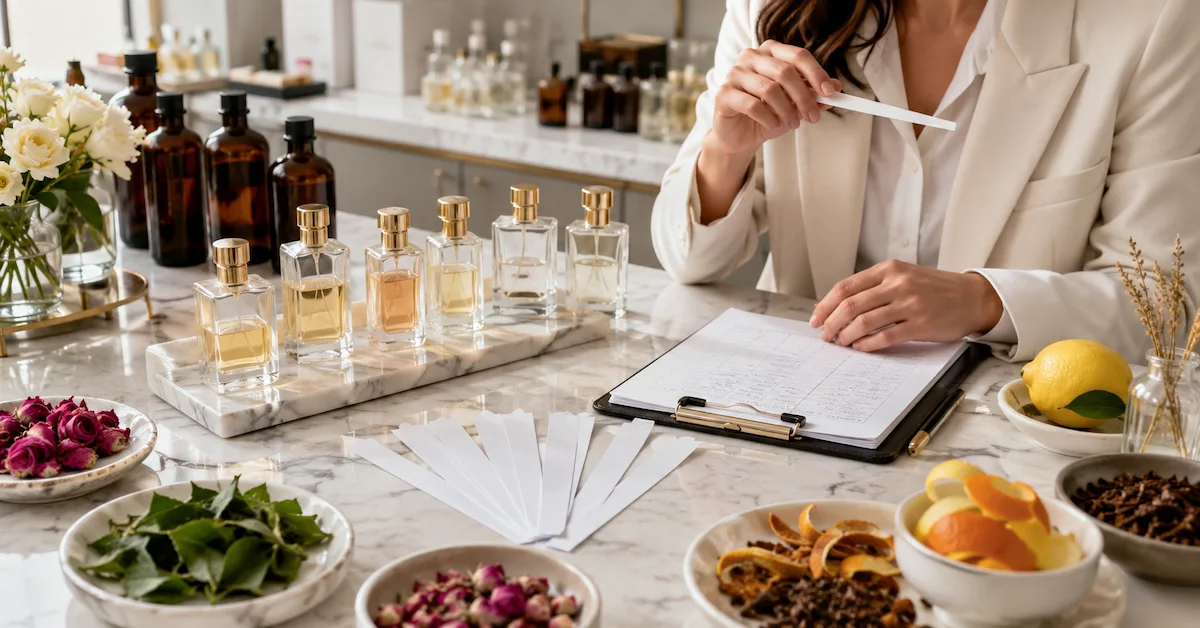
Why Choosing the Right Fragrance Manufacturer Matters
Fragrance is not only about creating an attractive smell. It combines creativity, chemistry, formulation expertise, and consumer experience.
A successful fragrance product requires:
- A suitable scent profile
- Stable fragrance performance
- Compatibility with different product bases
- Reliable production quality
- Compliance with international standards
For example, fragrance used in shampoo must remain stable in cosmetic formulas, while fragrance used in laundry detergent needs excellent durability after washing.
Therefore, brands should evaluate manufacturers based on their technical capabilities instead of only comparing prices.
A professional fragrance supplier should be able to provide solutions from initial concept development to final production. Brands can also explore more information about fragrance solutions through the company’s fragrance knowledge center.
Understand Your Fragrance Product Requirements First
Before contacting a fragrance manufacturer, buyers should clearly define their product requirements.
Different industries require different fragrance solutions.
Fine Fragrance Products
For perfume brands, important factors include:
- Unique scent identity
- Premium fragrance ingredients
- Long-lasting performance
- Exclusive fragrance formulas
Personal Care Products
For shampoo, shower gel, skincare, and cosmetics, manufacturers need to consider:
- Formula compatibility
- Skin safety requirements
- Fragrance stability
- Consumer preferences
Home Care Products
For products such as laundry detergent, fabric softener, and room spray, buyers should focus on:
- Long-lasting fragrance release
- Odor masking ability
- Stability during storage
Hospitality Applications
Hotels and commercial spaces often require:
- Signature scent development
- Consistent fragrance experience
- Large-scale supply capability
A professional fragrance manufacturer should understand different application requirements and provide suitable fragrance solutions rather than offering standard formulas for every product.
Evaluate the Fragrance Manufacturer’s R&D Capability
Research and development capability is one of the most important factors when selecting a fragrance partner.
A strong fragrance manufacturer should have experienced fragrance developers who can transform a brand concept into a market-ready scent.
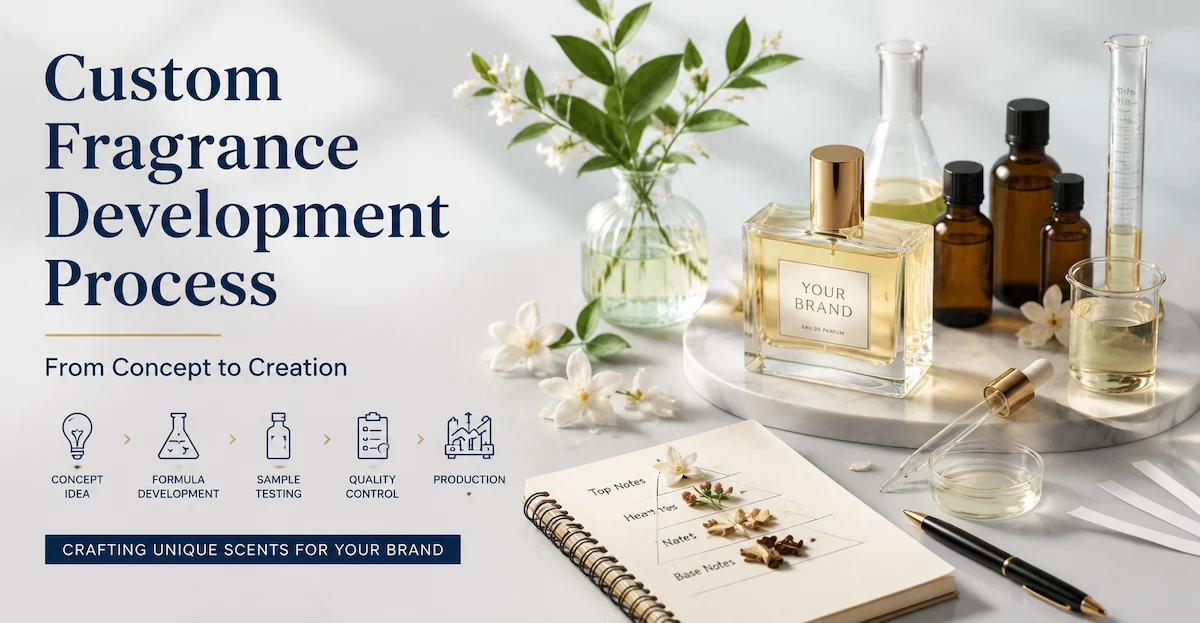
Fragrance Development Process
A professional fragrance development process usually includes several structured stages.
| Stage | Description |
|---|---|
| Fragrance Brief | Understand brand positioning, target customers, and scent expectations |
| Concept Development | Define fragrance direction and scent style |
| Formula Creation | Develop fragrance compositions using different ingredients |
| Sample Evaluation | Test and adjust fragrance samples |
| Final Approval | Confirm formula before production |
A structured development process helps ensure that the final fragrance matches the brand identity.
You can learn more about how fragrance projects move from concept to production through the company’s fragrance development process.
Professional Fragrance Formula Knowledge
Experienced manufacturers understand fragrance structures including:
Top Notes
The first impression of a fragrance.
Common examples:
- Citrus
- Fresh notes
- Green notes
Middle Notes
The heart of the fragrance.
Common examples:
- Floral notes
- Fruity notes
- Spicy notes
Base Notes
The long-lasting foundation.
Common examples:
- Woody notes
- Amber
- Musk
A professional fragrance manufacturer combines different fragrance notes to create balanced and memorable scent experiences.
Check the Manufacturer’s Custom Fragrance Development Ability
Many brands today are looking for customized fragrance solutions instead of standard products.
A capable custom fragrance manufacturer should support:
- Custom scent creation
- Formula adjustment
- Market-specific fragrance development
- Product application testing
- Private label projects
For example, a luxury hotel may need a signature scent that represents its brand identity, while a laundry brand may require a fresh fragrance that remains noticeable after washing.
The ability to create customized solutions is a major difference between a basic fragrance supplier and a professional manufacturing partner.
Brands looking for personalized scent solutions can explore available custom fragrance solutions to better understand how fragrance concepts can be developed for different applications.
Review the Fragrance Manufacturer’s Production Process and Manufacturing Capability
After confirming a manufacturer’s R&D capability, buyers should evaluate whether the supplier has a reliable production system to transform fragrance concepts into consistent commercial products.
A professional fragrance manufacturer should have complete manufacturing capabilities covering:
- Raw material management
- Formula blending
- Production control
- Quality inspection
- Packaging support
- Batch traceability
- Global delivery support
A stable production system helps brands avoid:
- Inconsistent fragrance performance
- Delayed delivery schedules
- Quality fluctuations between batches
- Supply chain risks
Evaluate Raw Material Management and Ingredient Control
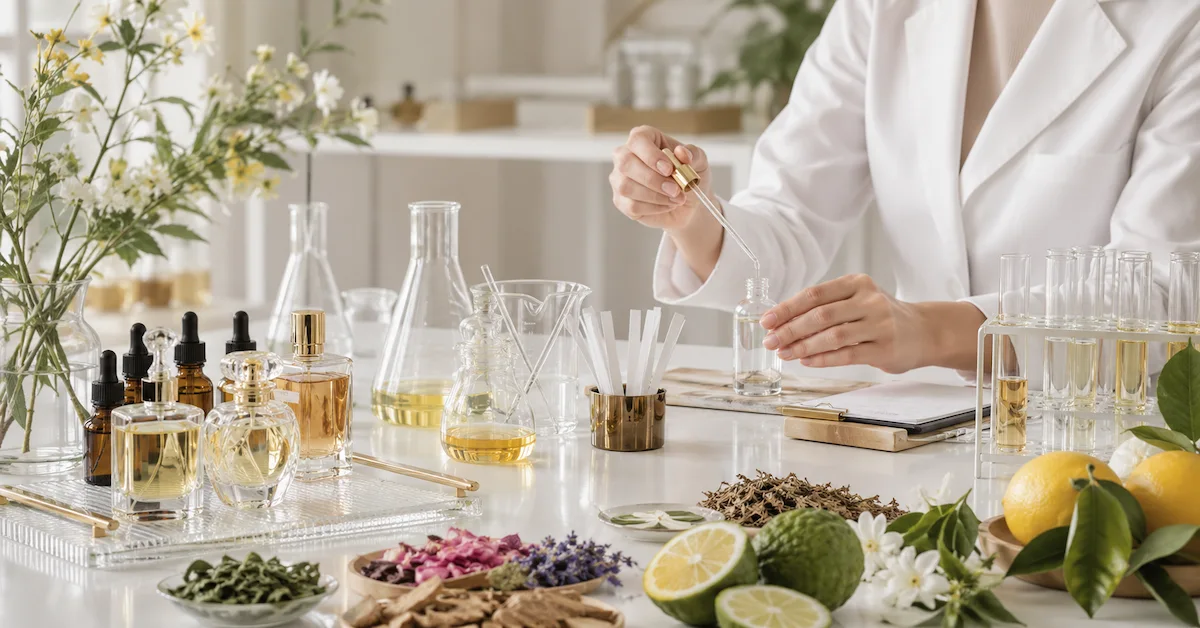
High-quality fragrance production starts with reliable raw materials.
A professional fragrance manufacturer should have strict management procedures for:
- Fragrance oils
- Aroma compounds
- Natural extracts
- Essential oils
- Functional ingredients
Ingredient Traceability
Reliable suppliers should maintain detailed records of:
- Raw material sources
- Supplier information
- Batch numbers
- Testing reports
- Storage conditions
This allows manufacturers to quickly identify and solve potential quality issues during production.
Material Selection Expertise
Different product categories require different fragrance characteristics.
For example:
| Application | Key Fragrance Requirements |
|---|---|
| Laundry Detergent | Long-lasting scent, washing durability, formula compatibility |
| Shampoo | Smooth fragrance experience, stability in surfactant systems |
| Skincare Products | Safety, mildness, ingredient compatibility |
| Room Spray | Fast diffusion, balanced scent intensity |
| Hotel Fragrance | Premium atmosphere, brand identity |
| Car Fragrance | Heat resistance, controlled scent release |
A professional fragrance supplier should recommend suitable fragrance solutions based on the final application instead of providing identical formulas for every product category.
Evaluate the Fragrance Manufacturing Process
A reliable manufacturing workflow ensures consistency from laboratory samples to large-scale production.
A typical fragrance manufacturing process includes the following stages:
1. Formula Preparation
The production team prepares fragrance ingredients according to the approved formula.
Key controls include:
- Accurate weighing
- Ingredient sequence control
- Production environment management
- Formula confidentiality
2. Blending and Maturation
During blending, fragrance ingredients are combined according to the designed formula.
The maturation process allows different components to integrate properly.
Benefits include:
- Improved fragrance balance
- More stable scent performance
- Better overall fragrance quality
3. Filtration and Quality Inspection
After blending, the fragrance is inspected for:
- Appearance
- Color consistency
- Odor profile
- Physical properties
- Stability performance
4. Filling and Packaging
Depending on customer requirements, manufacturers may provide:
- Bulk fragrance supply
- Private label fragrance products
- Customized packaging solutions
A complete production system enables brands to move from initial development to commercial production with greater confidence.
Check the Fragrance Sample Development Process
Before mass production, sample development is a critical stage for fragrance projects.
A professional fragrance manufacturer should provide a structured sample evaluation process.
Step 1: Understand the Fragrance Brief
The manufacturer first collects project information, including:
- Brand positioning
- Target market
- Product category
- Preferred scent style
- Competitor references
For example:
A luxury perfume brand may request an elegant and exclusive scent profile, while a household cleaning brand may prioritize freshness and long-lasting performance.
Step 2: Create Initial Fragrance Samples
Fragrance developers create sample options based on customer requirements.
Possible fragrance directions include:
- Fresh fragrance
- Floral fragrance
- Woody fragrance
- Fruity fragrance
- Oriental fragrance
- Luxury fragrance
Step 3: Customer Evaluation
Customers evaluate samples based on:
- Scent preference
- Product application
- Market positioning
- Consumer expectations
Step 4: Formula Adjustment
Based on feedback, manufacturers optimize:
- Fragrance intensity
- Note balance
- Performance
- Cost structure
Step 5: Final Approval
After approval, the confirmed fragrance formula becomes the production reference.
A professional sample process reduces development risks and helps brands launch products with greater confidence.
For common questions about fragrance development, testing, and cooperation procedures, buyers can also review the company’s fragrance manufacturing FAQs.
Evaluate Quality Control and Fragrance Testing Standards
Quality control is one of the most important factors when selecting a fragrance manufacturer.
A reliable supplier should have a comprehensive QC system to ensure every batch meets approved standards.
Fragrance Stability Testing
Fragrance stability testing evaluates whether a fragrance maintains its performance under different conditions.
Common testing methods include:
| Testing Type | Purpose |
|---|---|
| Temperature Testing | Evaluate resistance to heat conditions |
| Storage Testing | Check long-term fragrance stability |
| Light Testing | Measure resistance to light exposure |
| Compatibility Testing | Confirm performance in different product formulas |
For example:
- Shampoo fragrance requires compatibility with cosmetic ingredients.
- Laundry fragrance requires durability after washing.
- Car fragrance requires resistance to temperature changes.
Batch Consistency Testing
A professional manufacturer should compare each production batch with approved fragrance standards.
Quality checks include:
- Scent profile comparison
- Appearance inspection
- Physical property testing
- Documentation verification
Consistent quality is especially important for international brands because customers expect the same fragrance experience across different markets.
Verify Certifications and Compliance Before Cooperation
Global fragrance buyers should evaluate whether suppliers can meet international compliance requirements.
A professional fragrance manufacturer should understand regulatory requirements and provide necessary documentation.
IFRA Certificate
IFRA (International Fragrance Association) standards are widely recognized within the fragrance industry.
IFRA compliance helps ensure fragrance ingredients are used according to established safety guidelines.
SDS (Safety Data Sheet)
SDS documents provide important product safety information, including:
- Chemical composition
- Handling instructions
- Storage requirements
- Safety precautions
COA (Certificate of Analysis)
COA documents help buyers verify:
- Product specifications
- Quality testing results
- Batch information
Other possible compliance documents include:
- Allergen Declaration
- REACH Compliance
- EU Cosmetic Regulation documents
For global brands, working with a supplier that provides complete compliance documentation can reduce import risks and improve market approval efficiency.
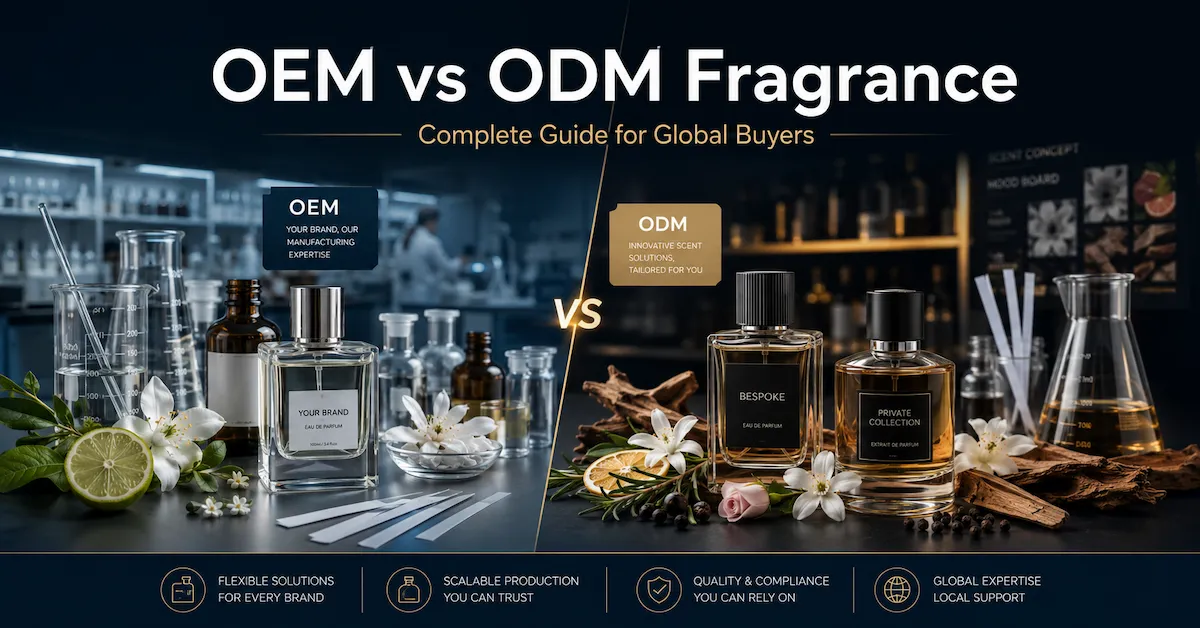
Compare OEM and ODM Fragrance Manufacturing Services
When selecting a fragrance partner, buyers should understand different cooperation models.
OEM Fragrance Manufacturing
OEM is suitable for companies that already have:
- Product concepts
- Brand positioning
- Specific fragrance requirements
The manufacturer focuses on:
- Production
- Quality control
- Manufacturing execution
ODM Fragrance Manufacturing
ODM is suitable for companies that need more development support.
Manufacturers may assist with:
- Fragrance concept creation
- Formula development
- Product recommendations
- Market-oriented solutions
OEM vs ODM Comparison Table
| Item | OEM Fragrance Manufacturer | ODM Fragrance Manufacturer |
|---|---|---|
| Formula Development | Customer requirements | Manufacturer-supported development |
| Customization Level | High | Medium to High |
| Brand Control | Higher | Flexible |
| Best For | Established brands | New brands and startups |
| Development Support | Limited | Comprehensive |
Choosing the right cooperation model depends on the brand’s experience, resources, and product development goals.
Understand MOQ, Lead Time, and Production Capacity

Before cooperation, buyers should confirm important commercial factors.
Minimum Order Quantity (MOQ)
MOQ may vary depending on:
- Fragrance type
- Formula complexity
- Packaging requirements
- Production method
Development Timeline
Fragrance development usually includes:
- Project discussion
- Fragrance brief confirmation
- Sample creation
- Testing and adjustment
- Final approval
- Mass production
The timeline depends on customization requirements and customer feedback speed.
Production Capacity
A reliable fragrance supplier should be able to support:
- Small trial projects
- New product launches
- Long-term bulk production
Manufacturing flexibility allows brands to scale their business without changing suppliers frequently.
Fragrance Manufacturer Evaluation Checklist
Before selecting a supplier, global buyers can use this checklist:
| Evaluation Factor | Key Questions |
|---|---|
| R&D Capability | Can the supplier create customized fragrance formulas? |
| Technical Expertise | Does the team understand fragrance structures and applications? |
| Sample Process | Is there a professional evaluation workflow? |
| Production Capacity | Can the supplier support future growth? |
| Quality Control | Are testing systems established? |
| Compliance | Can they provide IFRA, SDS, and COA documents? |
| OEM/ODM Support | Can they provide flexible cooperation models? |
Why Work With a Professional Fragrance Manufacturer?
A professional fragrance manufacturer is not only a production supplier but also a strategic development partner.
The right partner can help brands:
- Create unique fragrance products
- Improve product consistency
- Reduce development risks
- Meet international compliance requirements
- Scale production efficiently
Whether you are launching a perfume brand, expanding a cosmetics product line, developing home care products, or creating commercial scent solutions, selecting the right fragrance partner is essential.
You can learn more about available fragrance solutions and product development support through our website resources, or explore our FAQs about fragrance manufacturing before starting your project.
Frequently Asked Questions About Choosing a Fragrance Manufacturer
1. What should I look for in a fragrance manufacturer?
A reliable fragrance manufacturer should have strong R&D capability, fragrance formulation expertise, quality control systems, compliance documents, and customized development ability.
2. How long does fragrance development take?
The timeline depends on fragrance complexity, sample adjustments, testing requirements, and customer approval speed.
3. What is the MOQ for custom fragrance?
MOQ depends on fragrance type, formula complexity, packaging requirements, and supplier production policies.
4. Can fragrance manufacturers create exclusive scents?
Yes. Professional manufacturers can develop exclusive fragrance formulas according to brand positioning and target market requirements.
5. What certifications should fragrance suppliers provide?
Common documents include:
- IFRA Certificate
- SDS
- COA
- Allergen Declaration
- Regional compliance documents
6. What is the difference between OEM and ODM fragrance services?
OEM focuses on manufacturing based on customer requirements, while ODM provides additional product development support.
7. How do fragrance manufacturers test product stability?
Manufacturers use stability testing, temperature testing, storage evaluation, and compatibility testing to verify fragrance performance.
8. Can one fragrance formula be used for different products?
Not always. Different product systems require different compatibility evaluations.
9. How much does custom fragrance development cost?
The cost depends on ingredients, formula complexity, customization level, testing requirements, and production quantity.
10. How can I request fragrance samples?
Buyers can provide product information, target market, fragrance preferences, and application requirements to begin the sample development process.
Conclusion: Choosing the Right Fragrance Manufacturer for Your Brand
Choosing the right fragrance manufacturer is a key decision for brands that want to develop competitive fragrance products.
A reliable partner should provide complete support from fragrance development and sample testing to manufacturing, quality control, and compliance documentation.
By evaluating R&D capability, production processes, testing standards, certifications, and OEM/ODM services, buyers can reduce risks and establish long-term cooperation with the right supplier.
If you are looking for a professional partner for custom fragrance development, private label fragrance, or bulk fragrance production, contact our fragrance team to discuss your project requirements and receive fragrance solutions tailored to your market.