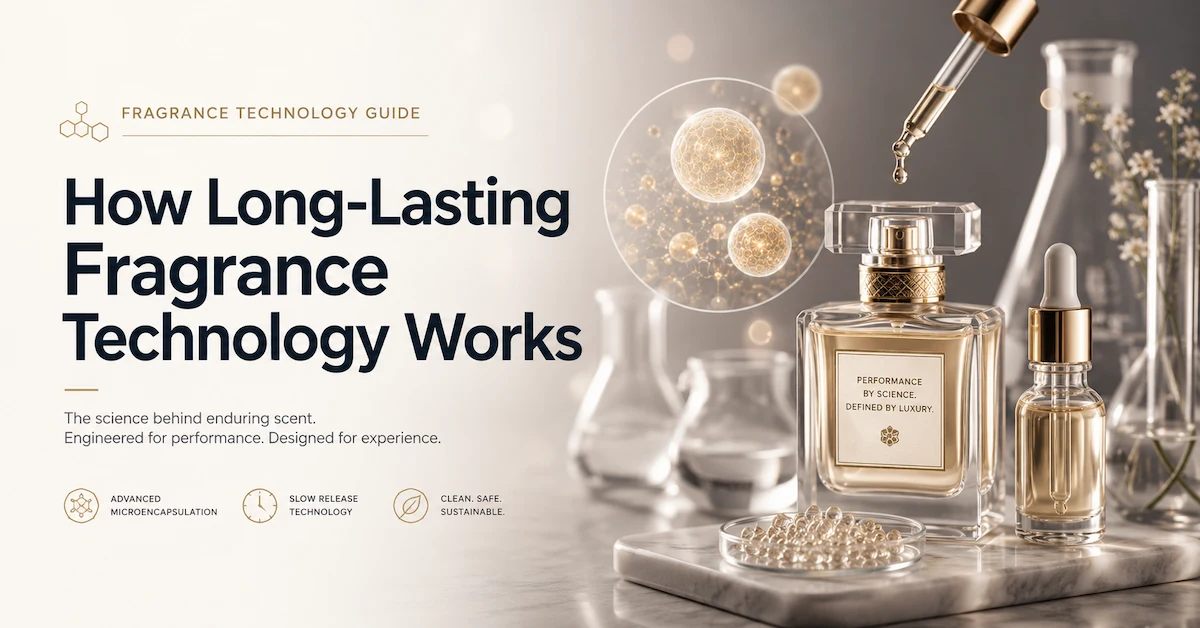
Microencapsulation fragrance technology is an advanced fragrance delivery method that protects fragrance ingredients inside microscopic capsules and controls when the scent is released.
Unlike traditional fragrance systems, where fragrance molecules can evaporate quickly, microencapsulation helps preserve fragrance ingredients and release them gradually under specific conditions.
The technology is widely used to improve:
- Fragrance longevity
- Scent retention
- Product performance
- Consumer experience
A professional fragrance manufacturer combines fragrance chemistry, encapsulation techniques, and application knowledge to develop solutions suitable for different product categories.

Why Traditional Fragrance Loses Scent Quickly
Traditional fragrance systems often face challenges during storage and use.
Fast Evaporation
Many fragrance molecules naturally evaporate after exposure to:
- Air
- Heat
- Light
This can reduce:
- Scent intensity
- Fragrance duration
- Product performance
Environmental Influence
External conditions can affect fragrance performance, including:
- Temperature changes
- Humidity
- Storage time
Product Formula Interaction
Different product systems may influence fragrance stability.
For example:
Laundry products contain:
- Surfactants
- Enzymes
- Cleaning agents
Personal care products contain:
- Conditioning ingredients
- Preservatives
- Active components
Without proper technology, fragrance performance may decrease over time.
How Microencapsulation Fragrance Technology Works
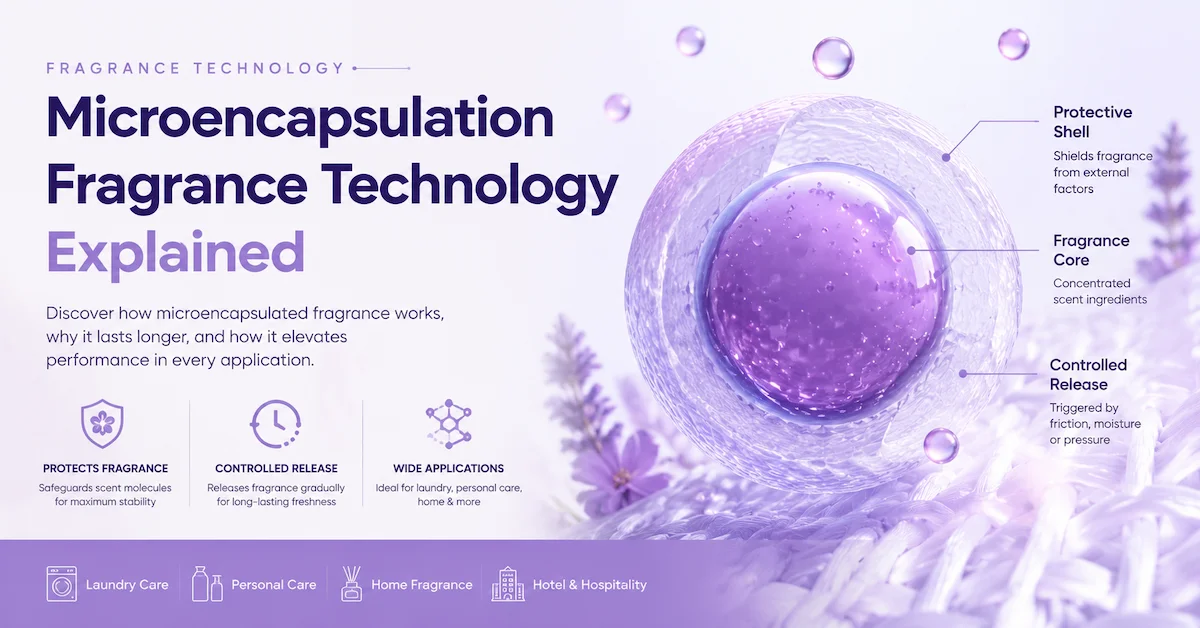
Microencapsulation works by creating a protective structure around fragrance ingredients.
The basic concept includes:
- Fragrance core material
- Protective capsule wall
- Controlled release mechanism
Fragrance Encapsulation Process
A professional encapsulation process usually includes several stages.
Step 1: Fragrance Ingredient Selection
Developers select suitable fragrance materials based on:
- Product application
- Performance requirements
- Target scent profile
Materials may include:
- Aroma compounds
- Essential oils
- Specialty fragrance ingredients
Step 2: Capsule Formation
Fragrance ingredients are surrounded by protective materials to create microcapsules.
The capsule structure helps:
- Protect fragrance molecules
- Reduce evaporation
- Improve stability
Step 3: Controlled Release Design
The release system determines when and how fragrance is released.
Release triggers may include:
- Friction
- Moisture
- Pressure
- Movement
This allows fragrance to be delivered at the right moment instead of releasing immediately.
Brands can learn more about professional fragrance creation methods through the fragrance development process.
Key Components of Microencapsulated Fragrance
Fragrance Core Material
The fragrance core contains the active scent ingredients.
Selection depends on:
- Desired fragrance profile
- Application requirements
- Performance expectations
Common fragrance components include:
- Floral notes
- Fresh notes
- Woody notes
- Fruity notes
Capsule Wall Material
The capsule wall protects fragrance ingredients.
Its main functions include:
- Improving stability
- Controlling release speed
- Protecting fragrance molecules
A suitable wall material helps balance:
- Protection
- Release performance
- Product compatibility
Benefits of Microencapsulation Fragrance Technology
Longer-lasting Fragrance Performance
The biggest advantage of microencapsulation is improved fragrance durability.
Instead of releasing all fragrance immediately, capsules release fragrance gradually.
Benefits include:
- Longer scent duration
- Better fragrance retention
- Improved user experience
Improved Product Experience
Microencapsulated fragrance helps brands create products with stronger sensory value.
Examples:
Laundry products:
- Fresh fabric scent after washing
Shampoo products:
- Longer-lasting hair fragrance
Hotel fragrance systems:
- Continuous environmental scent
Better Formula Stability
Microencapsulation can help protect fragrance ingredients from:
- Oxidation
- Environmental factors
- Formula interactions
This improves product consistency during storage and use.
Applications of Microencapsulation Fragrance Technology
Microencapsulation fragrance technology is widely used in industries where brands need improved scent durability, controlled release, and better product performance.
Different applications require different fragrance solutions because each product category has unique formulation characteristics and consumer expectations.
A professional fragrance manufacturer evaluates:
- Product environment
- Formula compatibility
- Release requirements
- Target user experience
Microencapsulated Fragrance for Laundry Products
Laundry care is one of the most important applications of microencapsulation technology.
Consumers increasingly expect laundry products to provide freshness not only during washing but also after clothes are dried and worn.
Benefits for Laundry Brands
Microencapsulated fragrance helps laundry products achieve:
- Longer fabric freshness
- Better fragrance retention
- Improved consumer satisfaction
- Stronger product differentiation
How Microcapsules Improve Laundry Fragrance
During washing, fragrance capsules remain attached to fabrics.
When consumers:
- Wear clothes
- Touch fabrics
- Move during daily activities
the capsules can release fragrance gradually through friction.
This creates a longer-lasting freshness experience compared with traditional fragrance systems.
Common Laundry Applications
| Application | Microencapsulation Benefits |
|---|---|
| Laundry Detergent | Extended freshness after washing |
| Fabric Softener | Improved fabric fragrance retention |
| Laundry Capsules | Controlled fragrance release |
| Scent Booster | Enhanced fragrance intensity |
Microencapsulated Fragrance for Personal Care Products
Personal care brands use microencapsulation technology to improve sensory experiences.
Common applications include:
- Shampoo
- Body wash
- Hair care products
- Body lotion
Shampoo Fragrance Applications
For shampoo products, consumers often expect fragrance to remain noticeable after washing.
Microencapsulated fragrance can help improve:
- Hair fragrance retention
- Long-lasting freshness
- Premium product experience
The fragrance system must also maintain compatibility with shampoo ingredients, including:
- Surfactants
- Conditioning agents
- Preservatives
Body Care Applications
For body care products, microencapsulation helps brands create:
- Longer-lasting scent experiences
- More memorable product usage
- Enhanced premium positioning
Microencapsulated Fragrance for Home and Hospitality Applications
Home fragrance and hospitality industries require stable and continuous scent performance.
Applications include:
- Room fragrance
- Hotel scent systems
- Commercial fragrance solutions
- Ambient fragrance products
Hotel Fragrance Applications
Hotels use fragrance to create memorable environments.
Microencapsulation technology helps support:
- Stable scent release
- Consistent atmosphere
- Longer fragrance performance
For hospitality brands developing unique scent experiences, professional custom fragrance solutions can help create fragrances based on brand identity and space requirements.
Testing and Quality Control of Microencapsulated Fragrance
Advanced fragrance technology requires strict testing to ensure performance and reliability.
A professional supplier should evaluate both capsule performance and final product application.
Capsule Stability Testing
Stability testing evaluates whether fragrance capsules maintain their structure and performance during storage.
Important factors include:
- Temperature changes
- Humidity exposure
- Storage duration
- Formula environment
Why Capsule Stability Matters
Poor capsule stability may cause:
- Early fragrance release
- Reduced scent performance
- Product inconsistency
A reliable fragrance manufacturer uses stability testing to ensure consistent performance throughout product shelf life.
Controlled Release Performance Testing
Controlled release is one of the most important advantages of microencapsulation.
Testing evaluates:
- Release timing
- Fragrance intensity
- Scent duration
Different applications require different release characteristics.
For example:
Laundry products need fragrance release during fabric movement, while hotel fragrance systems require continuous environmental diffusion.
Sensory Evaluation
Technical performance alone is not enough.
Fragrance experts also evaluate:
- Initial scent impression
- Fragrance balance
- Long-term perception
- Consumer acceptance
Sensory evaluation ensures that technology improves not only fragrance duration but also overall user experience.
How to Choose a Microencapsulation Fragrance Supplier
Selecting the right technology partner is essential for brands that require advanced fragrance performance.
A professional supplier should have expertise in:
- Fragrance formulation
- Encapsulation technology
- Application development
- Quality control
Evaluate Technical Capability
A qualified supplier should understand:
- Microcapsule design
- Fragrance chemistry
- Release mechanisms
- Product compatibility
Technical experience allows manufacturers to develop solutions for different industries.
Review R&D and Development Process
A strong supplier should provide a complete development workflow.
Including:
- Product requirement analysis
- Fragrance concept development
- Encapsulation design
- Sample creation
- Performance testing
- Final approval
You can learn more about professional fragrance development methods through the fragrance development process.
Check Manufacturing and Quality Systems
For commercial production, brands should evaluate:
- Production capacity
- Batch consistency
- Quality inspection
- Documentation system
A reliable supplier should maintain consistent performance from laboratory samples to large-scale production.
Compliance and Documentation
Global buyers should confirm whether suppliers provide necessary compliance documents.
Important documents include:
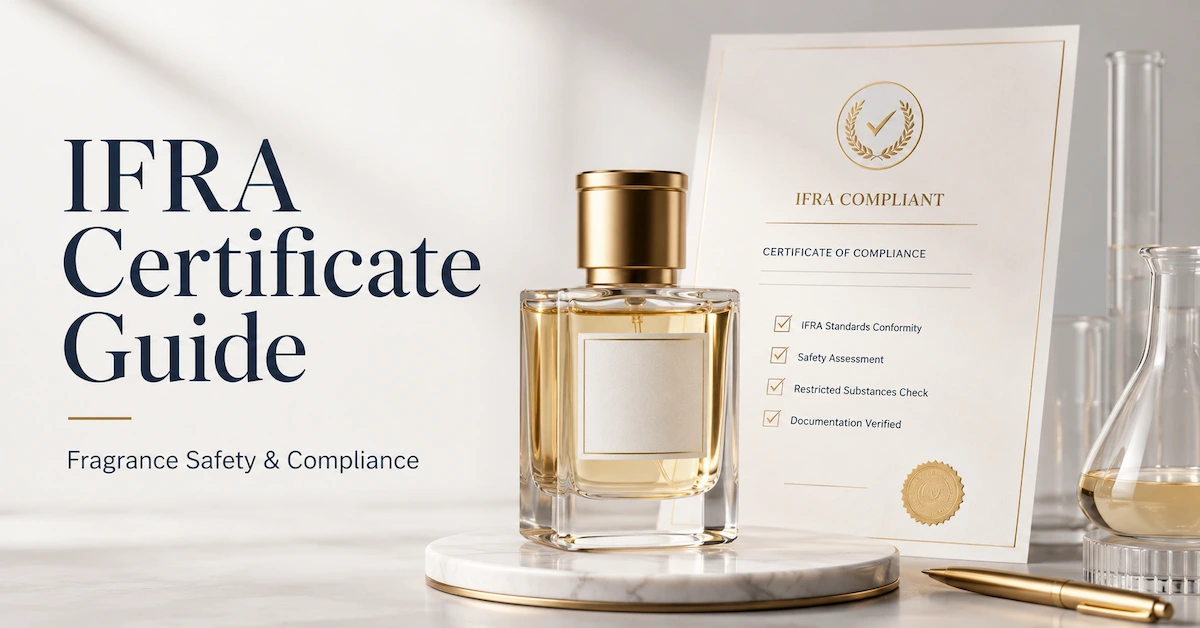
IFRA Certificate
Confirms fragrance safety compliance according to recognized industry standards.
SDS
Provides:
- Product safety information
- Storage requirements
- Handling instructions
COA
Provides:
- Product specifications
- Quality testing information
- Batch records
Microencapsulation Fragrance Supplier Evaluation Checklist
| Evaluation Factor | Why It Matters |
|---|---|
| Encapsulation Technology | Improve fragrance durability |
| R&D Capability | Develop customized solutions |
| Testing Ability | Verify performance |
| Quality Control | Maintain consistency |
| Compliance Documents | Support global markets |
| Production Capacity | Ensure reliable supply |
Frequently Asked Questions About Microencapsulation Fragrance Technology
What is microencapsulation fragrance technology?
Microencapsulation fragrance technology is a method that protects fragrance ingredients inside tiny capsules and releases scent gradually when triggered.
How does fragrance encapsulation work?
Fragrance molecules are surrounded by a protective wall material that reduces evaporation and controls release speed.
Why does microencapsulation make fragrance last longer?
Because fragrance is protected inside capsules and released gradually instead of evaporating immediately.
What products use microencapsulated fragrance?
Common applications include:
- Laundry detergent
- Fabric softener
- Shampoo
- Home fragrance
-
Hotel fragrance
Is microencapsulated fragrance safe?
When developed according to proper safety standards and compliance requirements, microencapsulated fragrance can be safely used in various applications.
How is fragrance capsule performance tested?
Testing includes:
- Stability testing
- Release performance testing
- Sensory evaluation
- Compatibility testing
What is controlled release fragrance?
Controlled release fragrance is a technology that manages when and how fragrance ingredients are released.
Can microencapsulation fragrance be customized?
Yes. Manufacturers can customize fragrance formulas and capsule performance according to product requirements.
How do brands choose a microencapsulation fragrance supplier?
Brands should evaluate:
- Technical expertise
- R&D capability
- Testing systems
- Manufacturing capacity
- Compliance support
What is the difference between regular fragrance and microencapsulated fragrance?
Regular fragrance releases scent immediately, while microencapsulated fragrance provides controlled and extended scent release.
For additional technical questions, brands can explore our fragrance technology FAQs.
Conclusion: Improving Product Performance with Microencapsulation Technology
Microencapsulation fragrance technology provides brands with an effective way to improve fragrance longevity, stability, and consumer experience.
By combining:
- Advanced encapsulation technology
- Professional fragrance formulation
- Performance testing
- Quality control
brands can create products with stronger market competitiveness.
From laundry care and personal care to home fragrance and hospitality applications, microencapsulated fragrance solutions help companies deliver longer-lasting and more memorable scent experiences.
If you are looking for advanced fragrance technology solutions or customized microencapsulation projects, contact our fragrance team to discuss your requirements.