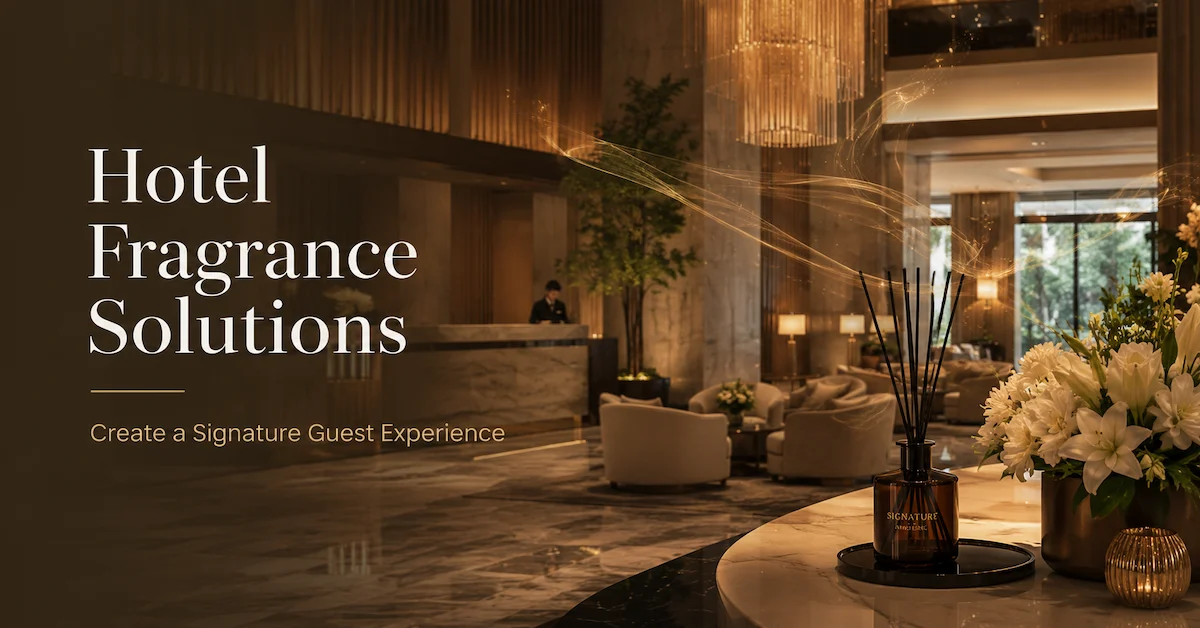
Hotels are no longer competing only through rooms, services, and facilities. Modern hospitality brands increasingly focus on creating complete sensory experiences.
Among all senses, scent has a unique ability to influence emotions and memories.
A professional hotel fragrance solution helps hotels create:
- A welcoming first impression
- A memorable guest experience
- Stronger brand recognition
- A premium atmosphere
Unlike traditional decoration elements, fragrance can create an invisible connection between guests and a hotel brand.
Fragrance Creates Emotional Connections
Human perception of smell is closely connected with memory and emotion.
A carefully designed hotel fragrance can help guests associate a specific scent with:
- Comfort
- Luxury
- Relaxation
- Quality service
For example:
A luxury resort may use warm woody notes to create an elegant atmosphere, while a modern business hotel may prefer fresh and clean fragrance profiles.
Fragrance Strengthens Hotel Brand Identity
A signature scent works similarly to a visual brand identity.
Hotels can use fragrance to communicate:
- Brand personality
- Service positioning
- Customer expectations
A unique scent allows guests to recognize a hotel through fragrance alone.
This is why many premium hospitality brands invest in custom fragrance development rather than using standard fragrance products.
Common Applications of Hotel Fragrance Solutions
Different hotel areas require different fragrance strategies.
A professional supplier should evaluate each space according to:
- Area size
- Air circulation
- Customer activity
- Desired atmosphere
Hotel Lobby Fragrance
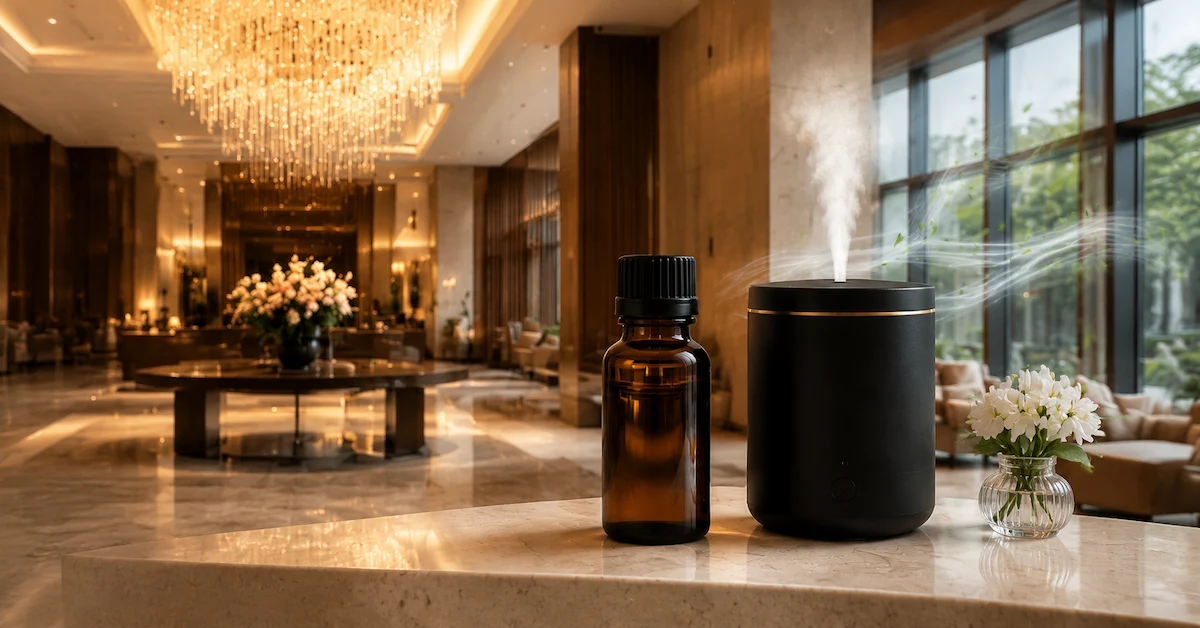
The lobby is usually the first place guests experience a hotel.
A suitable lobby fragrance should provide:
-
Immediate positive impression
- Balanced scent intensity
- Premium atmosphere
Common fragrance directions include:
- Fresh citrus
- Elegant floral
- Woody luxury notes
A professional hotel fragrance supplier should consider the relationship between fragrance intensity and space design.
Guest Room Fragrance
Guest rooms require a more comfortable and relaxing fragrance experience.
Compared with lobbies, room fragrance should usually be:
- Softer
- More calming
- Less intense
Common applications include:
- Room scent systems
- Linen fragrance
- Welcome amenities
Suitable fragrance styles:
- Lavender
- Clean cotton
- Soft floral
- Natural botanical notes
SPA and Wellness Fragrance
SPA environments focus on relaxation and emotional comfort.
Popular fragrance directions include:
- Herbal notes
- Green notes
- Essential oil-inspired scents
- Natural botanical profiles
The goal is to create a peaceful environment that supports customer relaxation.
Restaurant and Public Area Fragrance
Restaurants and public spaces require careful fragrance selection.
The fragrance should:
- Improve atmosphere
- Avoid interfering with food aromas
- Maintain customer comfort
Professional fragrance solutions consider the relationship between scent intensity and customer activities.
Types of Fragrance Used in Hotels
Different hotel brands choose different fragrance profiles according to their positioning.
Fresh and Clean Fragrance
Fresh fragrances are commonly used in:
- Business hotels
- Modern hotels
- Public spaces
Common notes include:
- Citrus
- Green
- Aquatic
Benefits:
- Creates cleanliness perception
- Provides refreshing atmosphere
- Appeals to a wide audience
Floral Fragrance
Floral fragrance is often used for:
- Luxury hotels
- Boutique hotels
- Premium hospitality spaces
Common notes include:
- Rose
- Jasmine
- White flowers
Benefits:
- Elegant feeling
- Soft atmosphere
- Premium positioning
Woody and Oriental Fragrance
Woody fragrance is often associated with luxury and sophistication.
Common notes include:
- Sandalwood
- Cedar
- Amber
- Musk
Suitable for:
- Luxury resorts
- High-end hotels
- Private clubs
How to Develop a Signature Hotel Scent
Creating a signature hotel scent requires professional fragrance development rather than simply selecting an existing fragrance.
A complete development process usually includes:
- Brand analysis
- Fragrance concept creation
- Formula development
- Sample testing
- Final approval
Brands can learn more about the complete fragrance development process to understand how fragrance concepts are transformed into commercial solutions.
Step 1: Understand Hotel Brand Positioning
Before creating a fragrance, manufacturers analyze:
- Hotel style
- Target guests
- Brand values
- Market positioning
For example:
A luxury resort may need a sophisticated and relaxing scent, while a business hotel may require a fresh and professional atmosphere.
Step 2: Create Fragrance Concepts
Fragrance developers create concepts based on:
- Emotional goals
- Brand personality
- Space application
The concept may define:
- Fresh
- Elegant
- Natural
- Luxury
- Relaxing
Step 3: Formula Development and Sample Testing
After confirming the fragrance direction, manufacturers develop formulas and create samples.
Testing includes:
- Scent evaluation
- Stability testing
- Diffusion performance
- Customer feedback
Technical Factors When Choosing Hotel Fragrance Solutions
A successful hotel fragrance solution requires more than an attractive scent. Hotels need fragrance systems that provide consistent performance across different spaces and operating conditions.
A professional fragrance partner should consider:
- Fragrance intensity
- Diffusion performance
- Stability
- Safety requirements
- Space characteristics
Long-lasting Fragrance Performance
Hotels usually operate for long hours, so fragrance solutions need to maintain a stable scent experience throughout the day.
Important performance factors include:
- Continuous fragrance release
- Balanced scent intensity
- Stable fragrance characteristics
For example:
A hotel lobby requires a fragrance that can create an immediate impression while maintaining comfort for guests who stay in the area for longer periods.
Scent Diffusion Technology
Different hotel environments require different fragrance diffusion approaches.
Factors affecting fragrance diffusion include:
- Space size
- Air circulation
- Ceiling height
- Customer traffic
A professional supplier should recommend suitable fragrance solutions based on actual application conditions.
Fragrance Stability Testing
Before commercial use, hotel fragrances should undergo stability evaluation.
Testing may include:
| Testing Method | Purpose |
|---|---|
| Temperature Testing | Evaluate performance under different conditions |
| Storage Testing | Check long-term fragrance consistency |
| Aging Testing | Observe scent changes over time |
| Performance Testing | Confirm continuous fragrance release |
Stability testing helps ensure hotels receive consistent fragrance performance after installation.
Hotel Scent Marketing and Brand Experience
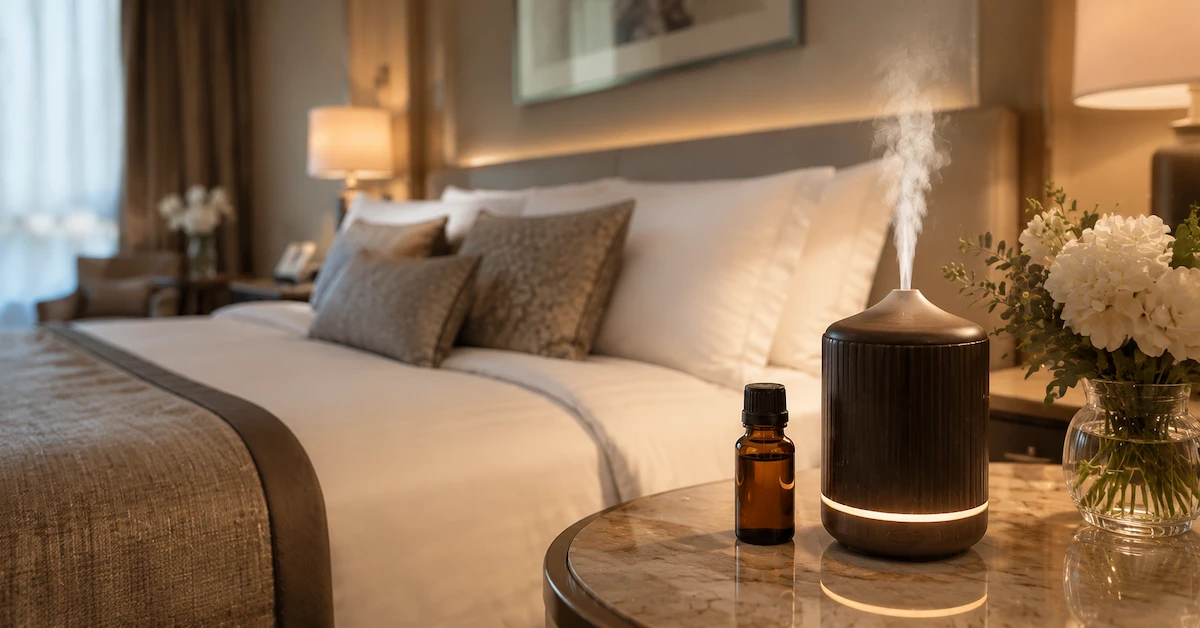
Hotel fragrance is not only an environmental feature. It is also an important part of scent marketing.
Scent marketing uses fragrance to influence:
- Customer perception
- Emotional connection
- Brand memory
How Scent Marketing Works in Hospitality
A carefully selected scent can help hotels:
Improve Guest Experience
A pleasant fragrance can make spaces feel:
- More comfortable
- More welcoming
- More premium
Strengthen Brand Recognition
A signature scent allows guests to associate a specific fragrance with a hotel brand.
This creates a unique sensory identity similar to:
- Logo design
- Interior style
- Brand colors
Increase Customer Loyalty
A memorable fragrance experience may encourage guests to:
- Remember the hotel
- Recommend the hotel
- Return in the future
Custom Hotel Fragrance Solutions for Hospitality Brands
Every hotel has different brand positioning and customer expectations.
Therefore, many hospitality companies choose custom fragrance solutions instead of standard fragrance products.
Custom development allows hotels to create:
- Exclusive scent identity
- Brand-specific fragrance profile
- Consistent guest experience
Suitable customers include:
- Luxury hotel chains
- Boutique hotels
- Resorts
- SPA brands
- Commercial properties
Hotels looking for personalized scent development can explore custom fragrance solutions to understand how fragrance concepts can be adapted for different hospitality applications.
Benefits of Custom Hotel Fragrance
Create a Unique Brand Signature
A custom scent helps hotels build stronger differentiation.
Instead of using common fragrance profiles, brands can develop a fragrance that represents:
- Their values
- Their environment
- Their target guests
Improve Customer Experience
Custom fragrances can be designed around specific emotions:
- Relaxation
- Luxury
- Freshness
- Warmth
Support Multiple Locations
Hotel groups may require consistent fragrance experiences across different properties.
A professional fragrance manufacturer can help maintain:
- Formula consistency
- Supply stability
- Quality standards
How to Choose a Hotel Fragrance Supplier
Selecting the right supplier is essential for successful hotel fragrance projects.
Hotels should evaluate suppliers based on technical ability, production capability, and service experience.
Evaluate Fragrance Development Capability
A professional supplier should have experience in:
- Scent concept creation
- Fragrance formulation
- Application testing
- Custom fragrance development
Strong development capability allows suppliers to create solutions that match hotel branding requirements.
Check Manufacturing and Supply Capability
Important factors include:
- Production capacity
- Quality control systems
- Batch consistency
- Delivery reliability
For hotel groups, supply stability is especially important because fragrance consistency directly affects guest experience.
Review Quality Control and Compliance
Professional fragrance suppliers should provide quality documentation.
Common documents include:
IFRA Certificate
Helps confirm fragrance safety compliance according to recognized industry standards.
SDS
Provides:
- Product safety information
- Storage requirements
- Handling guidance
COA
Provides:
- Product specifications
- Quality testing results
- Batch information
These documents help hospitality brands manage international purchasing and compliance requirements.
Hotel Fragrance Supplier Evaluation Checklist
| Evaluation Factor | Why It Matters |
|---|---|
| Custom Development | Create unique hotel scents |
| Fragrance Quality | Ensure premium guest experience |
| Testing Capability | Maintain stable performance |
| Compliance Documents | Support global requirements |
| Production Capacity | Ensure reliable supply |
| Industry Experience | Understand hospitality needs |
Why Work With a Professional Fragrance Manufacturer?
A professional fragrance manufacturer provides more than fragrance products.
The right partner can support hotels with:
- Fragrance concept development
- Custom scent creation
- Technical testing
- Quality control
- Long-term supply solutions
For hospitality brands, fragrance is an investment in customer experience and brand identity.
A reliable partner helps transform fragrance ideas into practical solutions that enhance hotel environments.
For more fragrance industry insights, explore our fragrance knowledge center.
Frequently Asked Questions About Hotel Fragrance Solutions
What are hotel fragrance solutions?
Hotel fragrance solutions are customized scent systems designed to improve guest experiences in hotels, resorts, and commercial hospitality spaces.
They include fragrance development, scent selection, testing, and supply support.
Why do hotels use fragrance?
Hotels use fragrance to:
- Create welcoming environments
- Strengthen brand identity
- Improve guest experience
- Build emotional connections
What is a signature hotel scent?
A signature hotel scent is a unique fragrance developed specifically for a hotel brand.
It represents the hotel’s personality and creates a memorable guest experience.
What fragrance is best for hotel lobbies?
The best hotel lobby fragrance depends on brand positioning.
Common choices include:
- Fresh fragrances
- Floral fragrances
- Woody luxury fragrances
How long does hotel fragrance last?
Duration depends on:
- Fragrance formula
- Diffusion method
- Space conditions
- Usage environment
Can hotels create custom fragrances?
Yes. Professional fragrance manufacturers can develop exclusive scents based on hotel branding, customer preferences, and space requirements.
How are hotel fragrances developed?
The development process usually includes:
- Brand analysis
- Fragrance concept creation
- Formula development
- Sample testing
- Final approval
What makes a good hotel fragrance supplier?
A reliable supplier should provide:
- R&D capability
- Custom development
- Testing support
- Quality control
- Compliance documents
What certifications are required for hotel fragrance?
Common documents include:
- IFRA Certificate
- SDS
- COA
How can hotels start a fragrance project?
Hotels can provide information about:
- Brand positioning
- Space requirements
- Desired atmosphere
- Target customers
A professional supplier can then develop suitable fragrance concepts.
For more questions about fragrance applications, visit our fragrance application FAQs.
Conclusion: Creating Memorable Experiences with Hotel Fragrance Solutions
Professional hotel fragrance solutions help hospitality brands create stronger emotional connections with guests.
A successful fragrance strategy combines:
- Brand positioning
- Custom scent development
- Technical testing
- Quality control
- Reliable supply capability
From hotel lobbies and guest rooms to SPA spaces and commercial environments, the right fragrance can transform ordinary spaces into memorable experiences.
Choosing an experienced fragrance partner allows hotels to develop unique scent identities while maintaining consistent quality and performance.
If you are planning a custom hotel fragrance project, contact our fragrance team to discuss your requirements and create a fragrance solution tailored to your brand.