Why Fragrance Is Important for Shampoo Products
Fragrance is one of the most important sensory factors in shampoo products.
Although shampoo mainly focuses on cleansing and hair care performance, fragrance strongly influences how consumers perceive product quality.
A well-developed shampoo fragrance can create:
- Freshness
- Comfort
- Premium experience
- Brand recognition
For many consumers, scent is one of the first characteristics they remember after using a shampoo product.
Therefore, choosing the right fragrance for shampoo is not only a product design decision but also an important branding strategy.
Fragrance Enhances Consumer Experience
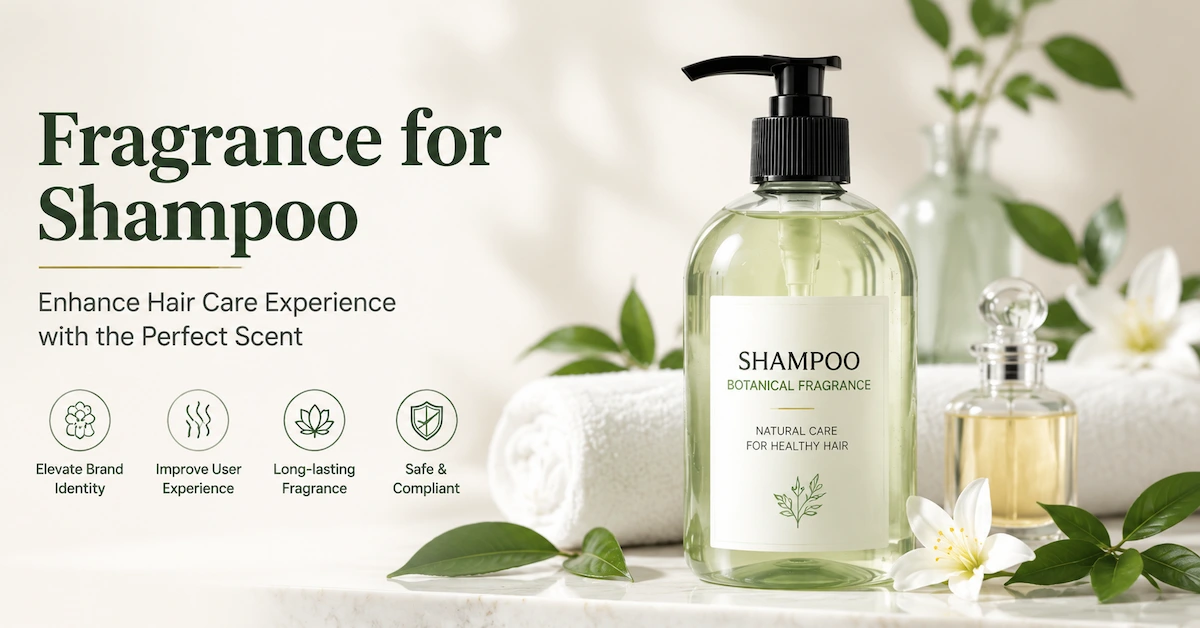
Shampoo is a daily-use personal care product. The fragrance experience can influence consumer satisfaction and repurchase decisions.
A successful shampoo fragrance should provide:
- Pleasant opening notes
- Balanced fragrance development
- Comfortable long-lasting scent
For example:
A refreshing shampoo may use clean and fresh notes to create a feeling of freshness, while a premium hair care product may use elegant floral or woody notes to create a luxury experience.
Fragrance Builds Brand Identity
In a competitive hair care market, fragrance helps brands create differentiation.
A unique fragrance profile can become part of a brand identity.
Examples:
- Luxury shampoo brands may develop sophisticated floral or woody scents
- Natural hair care brands may prefer herbal and botanical fragrance styles
- Youth-focused brands may choose fresh and fruity fragrance directions
Developing a recognizable scent helps brands create stronger emotional connections with consumers.
Different Types of Fragrance for Shampoo
Different shampoo categories require different fragrance directions.
A professional fragrance manufacturer should recommend fragrance solutions based on:
- Target consumers
- Product positioning
- Market trends
- Formula characteristics
Fresh and Clean Fragrance
Fresh fragrances are widely used in everyday shampoo products.
Common fragrance notes include:
- Citrus
- Green notes
- Aquatic notes
Advantages
Fresh fragrance provides:
- Clean feeling
- Lightweight experience
- Broad consumer acceptance
Suitable for:
- Daily shampoo
- Family shampoo products
- Refreshing hair care products
Floral Fragrance
Floral fragrance is commonly used in premium and feminine hair care products.
Common notes include:
- Rose
- Jasmine
- Lavender
- White flowers
Advantages
Floral fragrance creates:
- Softness
- Elegance
- Premium positioning
Suitable for:
- Luxury shampoo
- Women’s hair care products
- Beauty brands
Fruity Fragrance
Fruity fragrance is popular among younger consumers.
Common notes include:
- Peach
- Apple
- Berry
- Tropical fruits
Advantages
Fruity fragrance provides:
- Energy
- Youthful feeling
- Pleasant sensory experience
Herbal and Natural Fragrance
Natural fragrance styles are increasingly popular in clean beauty markets.
Common notes include:
- Mint
- Tea
- Botanical extracts
- Herbal blends
Suitable for:
- Natural shampoo
- Organic hair care products
- Wellness-focused brands
Key Factors When Choosing Fragrance for Shampoo
Choosing a shampoo fragrance requires more than selecting an attractive scent.
Brands should evaluate technical performance and application requirements.
Formula Compatibility
Shampoo formulas usually contain multiple functional ingredients, including:
- Surfactants
- Conditioning agents
- Preservatives
- Active ingredients
The fragrance must remain stable inside the shampoo system.
Poor compatibility may cause:
- Formula separation
- Color changes
- Reduced product stability
- Unpleasant odor changes
A professional supplier should conduct compatibility testing before mass production.
Long-lasting Fragrance Performance
Consumers expect shampoo fragrance to remain noticeable after use.
A high-performance shampoo fragrance should provide:
- Pleasant washing experience
- Hair freshness after rinsing
- Balanced scent retention
Technologies such as controlled release systems can improve fragrance durability.
Safety and Compliance Requirements
Because shampoo products directly contact skin and hair, fragrance safety is critical.
Brands should consider:
- Ingredient compliance
- Safety documentation
- Market regulations
Important documents include:
- IFRA Certificate
- SDS
- COA
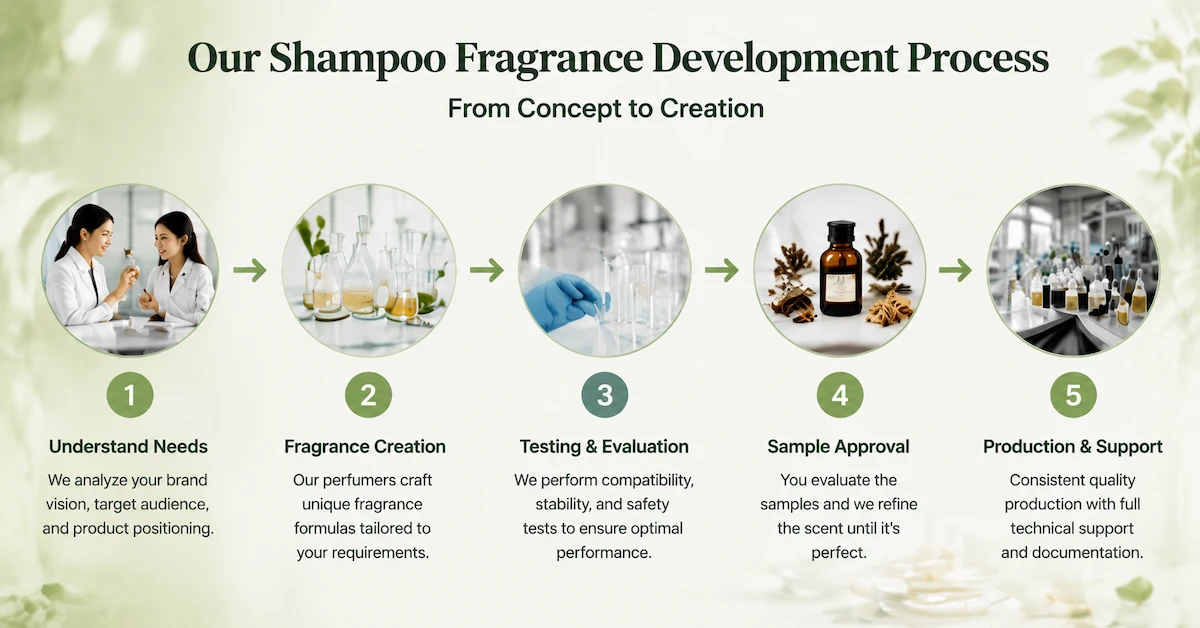
How Shampoo Fragrance Development Works
Developing effective fragrance for shampoo requires a combination of fragrance creativity, formulation expertise, and technical testing.
A professional fragrance manufacturer does not simply add fragrance ingredients into shampoo formulas. The development process must consider:
- Brand positioning
- Consumer preferences
- Shampoo formulation system
- Fragrance stability
- Production requirements
A structured fragrance development process helps brands transform fragrance concepts into stable and market-ready shampoo products.
Step 1: Understand Brand Requirements and Product Positioning
Before creating a shampoo fragrance formula, manufacturers need to understand the product goals.
Important information includes:
- Shampoo category
- Target customers
- Market region
- Brand image
- Desired fragrance style
Product Category Analysis
Different shampoo products require different fragrance characteristics.
| Shampoo Type | Fragrance Requirements |
|---|---|
| Daily Shampoo | Fresh, clean, widely accepted scent |
| Luxury Shampoo | Premium, sophisticated fragrance profile |
| Natural Shampoo | Botanical and gentle fragrance style |
| Anti-dandruff Shampoo | Fresh, clean, functional feeling |
| Children’s Shampoo | Soft, mild, pleasant fragrance |
A professional supplier evaluates the complete product positioning before developing fragrance solutions.
Step 2: Fragrance Formula Creation
After understanding product requirements, fragrance experts begin formula development.
A shampoo fragrance formula must balance:
- Scent appeal
- Formula compatibility
- Stability
- Performance
Building Fragrance Notes
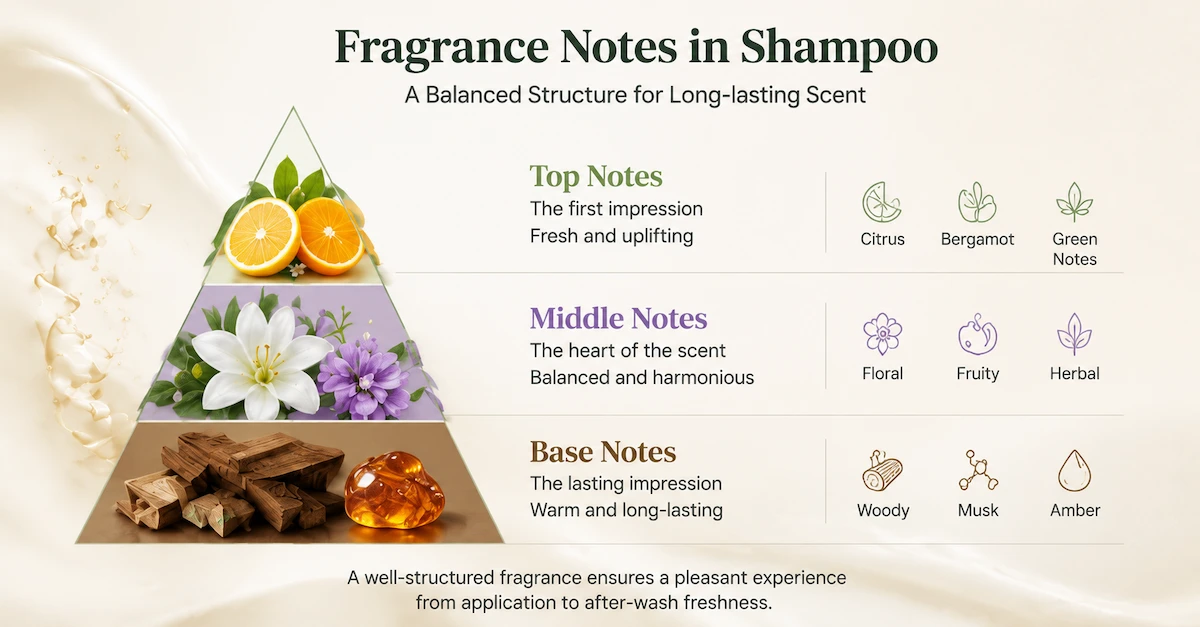
Professional fragrance development usually follows a three-layer structure.
Top Notes
Top notes create the first impression when consumers open and use the product.
Common examples:
- Citrus
- Fresh notes
- Green notes
They provide an immediate feeling of cleanliness and freshness.
Middle Notes
Middle notes create the main personality of the fragrance.
Common examples:
- Floral
- Fruity
- Herbal
They determine the overall emotional experience of the shampoo.
Base Notes
Base notes provide depth and longer-lasting performance.
Common examples:
- Woody
- Musk
- Amber
They help maintain fragrance character after use.
Step 3: Shampoo Fragrance Sample Development
After creating initial formulas, manufacturers develop samples for customer evaluation.
A professional sample development process usually includes several stages.
Initial Fragrance Samples
Fragrance developers create different scent directions based on:
- Brand requirements
- Market trends
- Target customers
Sample options may include:
- Fresh fragrance
- Floral fragrance
- Natural fragrance
- Luxury fragrance
Customer Evaluation and Feedback
Brands evaluate samples based on:
- Scent preference
- Product positioning
- Consumer expectations
Feedback helps manufacturers improve:
- Fragrance intensity
- Scent balance
- Performance
Formula Adjustment
After evaluation, fragrance experts optimize:
- Ingredient balance
- Scent structure
- Compatibility
- Cost efficiency
This process ensures the final fragrance matches the brand’s expectations.
Technical Testing for Shampoo Fragrance
Technical testing is a critical part of developing reliable fragrance for shampoo.
A fragrance may smell attractive during initial testing, but it must also maintain performance inside the shampoo formula.
Fragrance Stability Testing
Stability testing evaluates whether fragrance performance remains consistent over time.
Common testing methods include:
| Testing Method | Purpose |
|---|---|
| Temperature Testing | Evaluate heat resistance |
| Storage Testing | Check long-term stability |
| Aging Testing | Observe fragrance changes over time |
| Light Testing | Measure resistance to environmental factors |
Stability testing helps prevent:
- Scent changes
- Formula issues
- Product quality problems
Compatibility Testing with Shampoo Formulas
Shampoo formulas contain different ingredients that may affect fragrance performance.
Professional testing evaluates interaction between fragrance and:
- Surfactants
- Conditioning ingredients
- Preservatives
- Active ingredients
Why Compatibility Matters
Poor compatibility may cause:
- Reduced fragrance performance
- Formula separation
- Color changes
- Unstable product appearance
A qualified shampoo fragrance supplier should complete compatibility testing before large-scale production.
Sensory Evaluation of Shampoo Fragrance
Besides technical testing, sensory evaluation is also important.
Professional fragrance teams evaluate:
- Initial scent impression
- Fragrance balance
- Scent development over time
- Consumer acceptance
A successful shampoo fragrance should create a pleasant experience from opening the bottle to after-use hair freshness.
Custom Fragrance Solutions for Shampoo Brands
Many shampoo brands are moving beyond standard fragrance options and developing unique scent identities.
Custom fragrance development helps brands create products that are more recognizable in competitive markets.
Suitable customers include:
- New shampoo brands
- Premium hair care companies
- Private label beauty brands
- International cosmetic companies
Benefits of Custom Shampoo Fragrance
Custom fragrance solutions provide:
Brand Differentiation
A unique scent helps products stand out from competitors.
Better Consumer Connection
Signature fragrances can improve brand recognition.
Market-Specific Development
Manufacturers can adjust fragrance styles according to:
- Regional preferences
- Customer demographics
- Product positioning
Brands looking for personalized scent solutions can explore custom fragrance solutions for different hair care applications.
How to Choose a Shampoo Fragrance Supplier
Choosing the right supplier is an important decision for shampoo brands.
A reliable fragrance partner should provide more than fragrance ingredients.
Evaluate R&D Capability
A professional supplier should have experience in:
- Fragrance formulation
- Cosmetic applications
- Custom scent development
- Market trend analysis
Strong R&D capability helps brands create products that match consumer expectations.
Check Manufacturing Capability
Important evaluation factors include:
- Production capacity
- Quality control system
- Batch consistency
- Supply stability
A strong manufacturer should support both small product launches and long-term commercial production.
Review Testing and Quality Control Systems
Before cooperation, buyers should confirm whether suppliers provide:
- Stability testing
- Compatibility testing
- Sensory evaluation
- Quality documentation
Quality control helps ensure every production batch maintains the approved fragrance standard.
Verify Compliance Documents
International shampoo brands should consider regulatory requirements.
Common documents include:
IFRA Certificate
Provides fragrance safety guidance and industry compliance information.
SDS
Provides:
- Product safety information
- Handling requirements
- Storage recommendations
COA
Provides:
- Product specifications
- Quality testing information
- Batch details
These documents help brands manage international market requirements.
Shampoo Fragrance Supplier Evaluation Checklist
| Evaluation Factor | Why It Matters |
|---|---|
| Fragrance Expertise | Develop suitable scent profiles |
| Formula Knowledge | Ensure shampoo compatibility |
| Testing Capability | Improve product stability |
| Quality Control | Maintain production consistency |
| Compliance Support | Meet global requirements |
| Customization Ability | Create unique brand fragrances |
Why Work With a Professional Fragrance Manufacturer?
A professional fragrance manufacturer can support shampoo brands throughout the complete product development journey.
Key advantages include:
- Custom fragrance development
- Technical formulation support
- Sample evaluation
- Stability testing
- Quality control
- Scalable production
Whether you are developing daily shampoo, premium hair care products, or private label beauty solutions, choosing the right fragrance partner helps reduce development risks and improve product success.
Frequently Asked Questions About Fragrance for Shampoo
What type of fragrance is best for shampoo?
The best fragrance depends on product positioning. Fresh, floral, fruity, and natural fragrance profiles are commonly used for different shampoo categories.
Why is fragrance important in shampoo products?
Fragrance improves user experience, strengthens brand identity, and helps products differentiate in competitive markets.
How long does shampoo fragrance last?
Fragrance duration depends on formula design, fragrance quality, product compatibility, and technologies used for scent retention.
Can shampoo fragrance be customized?
Yes. Professional fragrance manufacturers can develop customized scent profiles based on brand requirements and target customers.
How do manufacturers test shampoo fragrance compatibility?
Manufacturers test fragrance interaction with shampoo formulas, including surfactants, conditioning ingredients, and other components.
What makes a good shampoo fragrance supplier?
A reliable supplier should provide R&D capability, testing support, quality control, compliance documents, and customization services.
Can fragrance affect shampoo stability?
Yes. Poorly selected fragrance may affect product appearance, formula stability, and overall performance.
What certifications are needed for shampoo fragrance?
Common documents include IFRA Certificate, SDS, COA, and other regional compliance documents.
How is custom shampoo fragrance developed?
The process usually includes:
- Brand analysis
- Fragrance concept creation
- Formula development
- Sample testing
- Final approval
How can brands start a shampoo fragrance project?
Brands can provide product requirements, target market information, and fragrance preferences to begin development discussions.
For more fragrance application information, visit our fragrance application FAQs.
Conclusion: Creating Better Hair Care Products with the Right Fragrance Solution
High-quality fragrance for shampoo requires more than a pleasant scent. It requires professional development, technical testing, formula compatibility analysis, and reliable manufacturing support.
The right fragrance partner can help shampoo brands:
- Develop unique scent identities
- Improve product experience
- Maintain consistent quality
- Reduce development risks
- Build stronger market differentiation
A professional supplier with fragrance expertise, testing capability, and customized solutions can help brands create successful hair care products.
If you are developing a new shampoo product or looking for customized fragrance solutions, contact our fragrance team to discuss your project requirements.